Vitamin B12 deficiency is a treatable condition that happens if you aren’t consuming enough vitamin B12 in your diet or if your body isn’t absorbing it properly. Vitamin B12 deficiency can cause physical, neurological and psychological symptoms. It can be treated with vitamin B12 medications, which can also provide numerous health benefits.
Advertisement
Cleveland Clinic is a non-profit academic medical center. Advertising on our site helps support our mission. We do not endorse non-Cleveland Clinic products or services. Policy
Endocrinology CareEndocrinology Care for ChildrenMake an AppointmentContentsArrow Down
What Is Vitamin B12 Deficiency?
Vitamin B12 deficiency, sometimes called cobalamin deficiency, happens when your body is either not getting enough or not absorbing enough vitamin B12 from the foods you eat. Vitamin B12 is an important nutrient that helps your body make red blood cells and DNA, the genetic material in all of your cells. Vitamin B12 deficiency can lead to megaloblastic anemia, which affects how your body functions. Without treatment, vitamin B12 deficiency can cause physical, neurological and psychological problems.
What is vitamin B12?
Vitamin B12 is one of the important B vitamins that helps your body keep your nerve cells and red blood cells healthy. It also helps your body make DNA.
Your body doesn’t make vitamin B12 on its own. You have to consume food and drinks that have vitamin B12 to get it. Vitamin B12 is found mostly in animal products, like fish, meat, dairy and eggs. It’s also in fortified foods (foods with vitamins and minerals added to them), like cereals, breads, plant-based milks and nutritional yeast.
Adults need around 2.4 micrograms (mcg) of vitamin B12 a day. And women who are pregnant or breastfeeding need more. The amount of B12 babies and children need varies based on age.
How does my body absorb vitamin B12?
Two things need to happen for your body to absorb vitamin B12 from the food you eat:
-
Hydrochloric acid and gastric acid in your stomach remove vitamin B12 from the food it is in.
-
Vitamin B12 combines with something called intrinsic factor, a protein your stomach makes.
Your digestive system can then absorb B12.
What is vitamin B12 deficiency anemia?
Vitamin B12 deficiency anemia happens when your body doesn’t have enough healthy red blood cells. As B12 helps make red blood cells, a lack of vitamin B12 can cause anemia, while supplementation with folic acid can also be a consideration in treatment. But you can also have a vitamin B12 deficiency without having anemia.
Symptoms and Causes
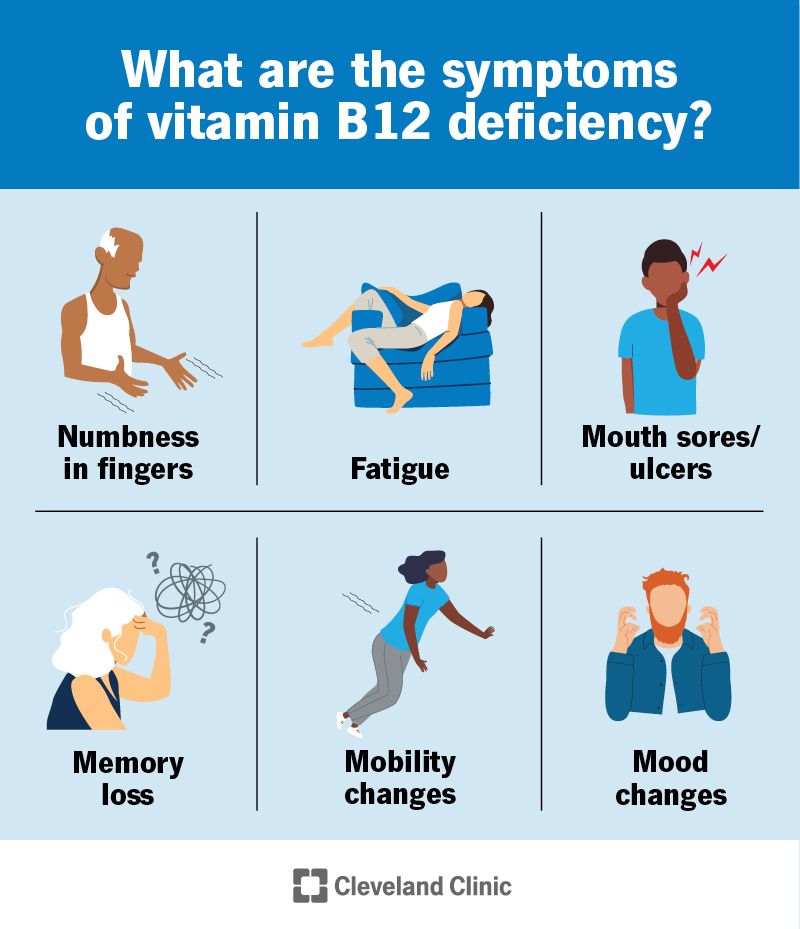
Symptoms of vitamin B12 deficiency
The symptoms of vitamin B12 deficiency can develop slowly and can get worse over time. You may have no symptoms despite having a low level of vitamin B12 in your body. Vitamin B12 deficiency can cause physical, neurological, and psychological symptoms, including cognitive impairment.
Physical symptoms can include:
-
Feeling very tired or weak
-
Not feeling as hungry as usual
-
Losing weight
-
Having a sore mouth or tongue ulcers
-
Having pale skin
Neurological symptoms can include:
-
Numbness or tingling in your hands and feet
-
Vision problems
-
Having a hard time remembering things or getting confused easily
-
Having a difficult time walking or speaking like you usually do
Psychological symptoms can include:
-
Feeling depressed
-
Feeling irritable
-
Experiencing a change in the way you feel or behave
Vitamin B12 deficiency causes
Vitamin B12 deficiency happens if you aren’t eating enough vitamin B12 or if you follow a vegan diet and your body isn’t absorbing the vitamin B12 you consume. Situations or conditions that can cause vitamin B12 deficiency include:
-
Lack of vitamin B12 in your diet: People who don’t eat enough foods that have vitamin B12 or don’t eat foods fortified with B12 can develop a deficiency, which can lead to an increased risk of various health issues.
-
Gastritis: Gastritis is inflammation of the stomach lining, and it’s a common cause of vitamin B12 deficiency. It can cause vitamin B12 deficiency due to a lack of hydrochloric acid in your stomach, which you need for B12 absorption.
-
Pernicious anemia: People who have pernicious anemia don’t make intrinsic factor. You need intrinsic factor so your body can absorb B12 vitamin. People with pernicious anemia have a B12 vitamin deficiency.
-
Digestive diseases: Diseases that affect your digestive system, like Crohn’s disease and celiac disease, can prevent your body from fully absorbing vitamin B12, increasing the risk of deficiency.
-
Surgery: People who have had gastrointestinal surgery — like a gastric bypass — can have difficulty absorbing vitamin B12, which can also raise the risk of deficiency.
-
Alcohol use disorder: This condition can damage your digestive system and cause vitamin B12 deficiency.
-
MTFHR deficiency: A gene mutation (change) that makes it harder to metabolize B12 correctly. You need higher doses of vitamin B12 to function well and, sometimes, a special methylated B12 supplement.
-
Transcobalamin II deficiency: This is a rare genetic disorder that makes it hard for vitamin B12 to circulate in your body.
Risk factors
You are more likely to develop vitamin B12 deficiency if you have one or more of the following risk factors:
-
Being older than 75 years: Older adults over 75 are more at risk for developing vitamin B12 deficiency because their bodies are often unable to fully absorb vitamin B12.
-
Having a digestive system disorder: Digestive disorders can make it more difficult for your body to absorb vitamin B12, especially in older people.
-
Following a vegan or vegetarian diet: Vitamin B12 is only naturally found in animal products, like meat and dairy. Because of this, older people who eat a vegan or vegetarian diet are more likely to have a vitamin B12 deficiency if they aren’t taking a B12 supplement.
-
Taking certain medications: Certain medications can cause low levels of vitamin B12 in your body, including metformin, proton pump inhibitors, H2 blockers and oral birth control pills. A systematic review of these medications has shown significant associations with vitamin B12 deficiency.
-
Having Sjögren’s syndrome: People with Sjögren’s syndrome are more likely to have vitamin B12 deficiency.
-
Drinking excessive amounts of alcohol: Chronic alcohol use can damage your digestive system and cause vitamin B12 deficiency.
Complications of B12 deficiency
Left untreated, vitamin B12 deficiency can cause lasting side effects that affect your nervous system and brain. More severe side effects include:
-
Degeneration of your spinal cord
-
Paranoia and delusions
Diagnosis and Tests
How is vitamin B12 deficiency diagnosed?
It can be difficult to diagnose vitamin B12 deficiency because you may not have symptoms, or symptoms can be like other nutritional deficiencies. Additionally, if there is nerve damage due to the deficiency, it may complicate diagnosis further. Healthcare providers will usually do blood tests to check for B12 deficiency in people who have a high risk of developing it.
Specific tests to help diagnose vitamin B12 deficiency are:
-
Vitamin B12 test
-
Homocysteine test
Management and Treatment
How is vitamin B12 deficiency treated?
Getting more vitamin B12 treats the deficiency. Providers may prescribe cyanocobalamin, a human-made form of B12. Options for vitamin B12 treatment include:
-
Vitamin B12 oral medication
-
Vitamin B12 injections
-
Vitamin B12 nasal spray or nasal gel. Consult with a healthcare provider regarding drug administration options for optimal treatment.
-
Eating more foods that are rich in B12 (like meat, fish, eggs and dairy)
Depending on the cause of the deficiency, you may only need treatment until your vitamin B12 levels are back to normal, or you may need B12 therapy for the rest of your life.
Outlook / Prognosis
What can I expect if I have this condition?
What you can expect depends on how early the vitamin B12 deficiency is caught and how low your levels are. If your deficit is mild, you may respond quickly to medication and eating more foods containing adequate intake of B12.
If you have chronic low B12 levels or have underlying health conditions that cause the deficiency, you may need to take B12 for the rest of your life (or for as long as you have the underlying condition), considering the tolerable upper intake level suggestions.
Work with your healthcare provider to find the treatment that works best for you based on your situation.
Prevention
How can I prevent B12 deficiency?
Most people can prevent vitamin B12 deficiency by eating food sources that have vitamin B12.
Options for consuming B12 include:
-
Animal food products: Fish, milk, dairy products, eggs, poultry and red meat all contain vitamin B12.
-
Fortified foods: Fortified foods are foods that have vitamins and nutrients added to them that they don’t naturally have. Fortified foods include certain breakfast cereals, nutritional yeast, plant milk and certain bread. You can check the food label to see if a food has been fortified with vitamin B12.
-
Vitamin B12 dietary supplements: Many multivitamins have vitamin B12. There are also supplements that only contain vitamin B12. Ask your healthcare provider or pharmacist to help you choose which supplement is best for you.
Other things you can do to help prevent vitamin B12 deficiency include:
-
Avoid alcohol: Frequent alcohol consumption can damage your digestive system and make it difficult for your body to absorb vitamin B12, particularly from sources like organ meats that are rich in this essential nutrient.
-
Do your best to manage a digestive disease: If you have a digestive disease, be sure to follow your healthcare provider’s instructions to stay healthy.
A note from Cleveland Clinic
Vitamin B12 is an important vitamin that your body needs to be healthy. But it’s one of those things that you probably don’t think about needing until you have symptoms of not having enough of it. Most of us can prevent vitamin B12 deficiency by consuming enough of it in the foods we eat. According to the institute of medicine, if you have risk factors for developing vitamin B12 deficiency or are experiencing symptoms, be sure to contact a healthcare provider to get a blood test to check your levels.
Care at Cleveland Clinic
Hormonal conditions can be tricky to find and complicated to treat. The experts in endocrinology at Cleveland Clinic are here to provide the best care.

Endocrinology CareEndocrinology Care for ChildrenMake an AppointmentLast reviewed on 09/30/2025.
Learn more about the Health Library and our editorial process.
References
Ad216.444.6568Appointments & LocationsRequest an Appointment
Abu Dhabi|CanadaFloridaLondonNevadaOhio


800.223.2273|MyChartNeed Help?CareersDonate Now

Find a ProviderLocations and DirectionsInstitutes and DepartmentsPatients and VisitorsHealth Library

Request an AppointmentHome/Health LibraryDiseases & ConditionsVitamin B12 DeficiencyAdvertisementAdvertisement
What Is Vitamin B12 Deficiency?
Vitamin B12 deficiency, sometimes called cobalamin deficiency, happens when your body is either not getting enough or not absorbing enough vitamin B12 from the foods you eat. Vitamin B12 is an important nutrient that helps your body make red blood cells and DNA, the genetic material in all of your cells. It’s essential to how your body functions. Folate deficiency symptoms can arise if vitamin B12 is lacking. Without treatment, vitamin B12 deficiency can cause physical, neurological and psychological problems.
What is vitamin B12?
Vitamin B12 is an important nutrient that helps your body keep your nerve cells and red blood cells healthy, as outlined in the dietary reference intakes. It also helps your body make DNA.
Your body doesn’t make vitamin B12 on its own. You have to consume food and drinks that have vitamin B12 to get it. Vitamin B12 is found mostly in animal products, like fish, meat, dairy and eggs. It’s also in fortified foods (foods with vitamins and minerals added to them), like cereals, breads, plant-based milks and nutritional yeast.
Adults need around 2.4 micrograms (mcg) of vitamin B12 a day. And women who are pregnant or breastfeeding need more. The amount of B12 babies and children need varies based on age.
How does my body absorb vitamin B12?
Two things need to happen for your body to absorb vitamin B12 from the food you eat:
-
Hydrochloric acid in your stomach removes vitamin B12 from the food it is in, allowing for absorption further down in the small intestine.
-
Vitamin B12 combines with something called intrinsic factor, a protein your stomach makes.
Your digestive system can then absorb B12.
What is vitamin B12 deficiency anemia?
Vitamin B12 deficiency anemia happens when your body doesn’t have enough healthy red blood cells. As B12 helps make red blood cells, a lack of vitamin B12 can cause high homocysteine levels and anemia. But you can also have a vitamin B12 deficiency without having anemia.
Symptoms and Causes
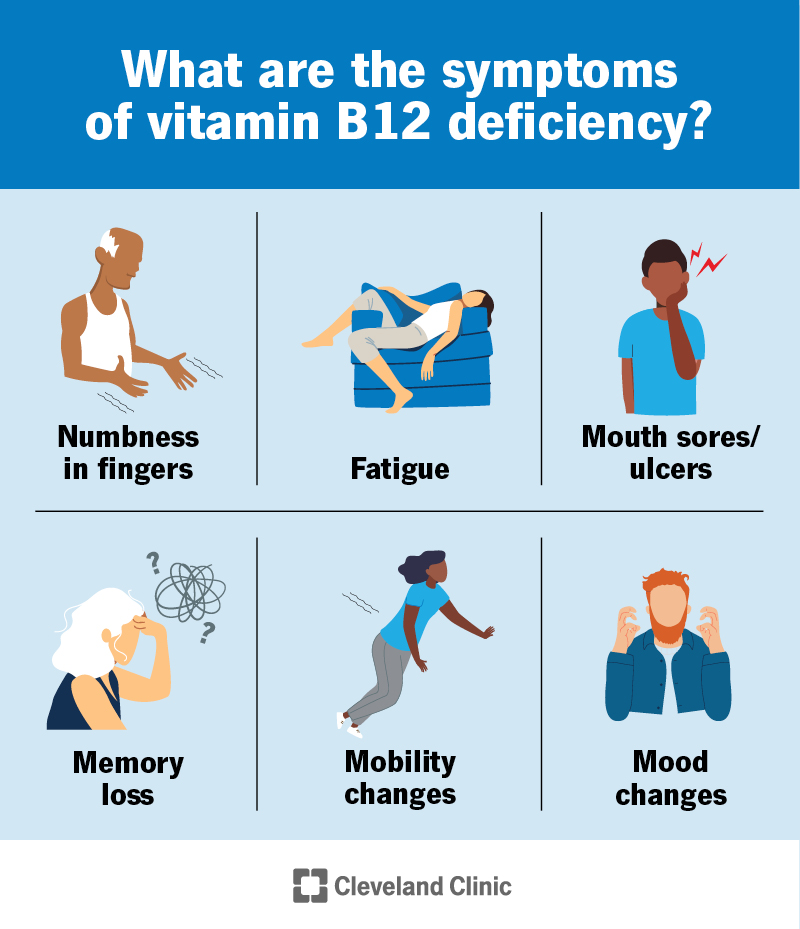
Symptoms of vitamin B12 deficiency
The symptoms of vitamin B12 deficiency can develop slowly and can get worse over time, potentially leading to cognitive decline. You may have no symptoms despite having a low level of vitamin B12 in your body. Vitamin B12 deficiency can cause physical, neurological and psychological symptoms.
Physical symptoms can include:
-
Feeling very tired or weak
-
Not feeling as hungry as usual
-
Losing weight
-
Having a sore mouth or tongue ulcers
-
Having pale skin
Neurological symptoms can include:
-
Numbness or tingling in your hands and feet
-
Vision problems
-
Having a hard time remembering things or getting confused easily
-
Having a difficult time walking or speaking like you usually do
Psychological symptoms can include:
-
Feeling depressed
-
Feeling irritable
-
Experiencing a change in the way you feel or behave
Vitamin B12 deficiency causes
Vitamin B12 deficiency happens if you aren’t eating enough vitamin B12 or your body isn’t absorbing the vitamin B12 you consume. Situations or conditions that can cause vitamin B12 deficiency include:
-
Lack of vitamin B12 in your diet: People who don’t eat enough foods that have vitamin B12 or don’t eat foods fortified with B12 can develop a higher risk of a deficiency.
-
Gastritis: Gastritis is inflammation of the stomach lining, and it’s a common cause of vitamin B12 deficiency. It can cause vitamin B12 deficiency due to a lack of hydrochloric acid in your stomach, which you need for B12 absorption.
-
Pernicious anemia: People who have pernicious anemia don’t make intrinsic factor. You need intrinsic factor so your body can absorb B12 vitamin. People with pernicious anemia have a B12 vitamin deficiency.
-
Digestive diseases: Diseases that affect your digestive system, like Crohn’s disease and celiac disease, as well as peptic ulcer disease, can prevent your body from fully absorbing vitamin B12.
-
Surgery: People who have had gastrointestinal surgery — like a gastric bypass — can have difficulty absorbing vitamin B12.
-
Alcohol use disorder: This condition can damage your digestive system and cause vitamin B12 deficiency.
-
MTFHR deficiency: A gene mutation (change) that makes it harder to metabolize B12 correctly. You need higher doses of vitamin B12 to function well and, sometimes, a special methylated B12 supplement.
-
Transcobalamin II deficiency: This is a rare genetic disorder that makes it hard for vitamin B12 to circulate in your body.
Risk factors
You are more likely to develop vitamin B12 deficiency if you have one or more of the following risk factors:
-
Being older than 75 years: People over 75 in the United States are more at risk for developing vitamin B12 deficiency because their bodies are often unable to fully absorb vitamin B12.
-
Having a digestive system disorder: Digestive disorders can make it more difficult for your body to absorb vitamin B12.
-
Following a vegan or vegetarian diet: Vitamin B12 is only naturally found in animal products, like meat and dairy. Because of this, people who eat a vegan or vegetarian diet are more likely to have a vitamin B12 deficiency if they aren’t taking a B12 supplement.
-
Taking certain medications: Certain medications can cause low levels of vitamin B12 in your body, including metformin, proton pump inhibitors, H2 blockers and oral birth control pills. This can increase your fracture risk.
-
Having Sjögren’s syndrome: People with Sjögren’s syndrome are more likely to have vitamin B12 deficiency.
-
Drinking excessive amounts of alcohol: Chronic alcohol use can damage your digestive system and cause vitamin B12 deficiency.
Complications of B12 deficiency
Left untreated, vitamin B12 deficiency can cause lasting side effects that affect your nervous system and brain. More severe side effects include:
-
Degeneration of your spinal cord
-
Paranoia and delusions
Diagnosis and Tests
How is vitamin B12 deficiency diagnosed?
It can be difficult to diagnose vitamin B12 deficiency because you may not have symptoms, or symptoms can be like other nutritional deficiencies linked to the central nervous system. Healthcare providers will usually do blood tests to check for B12 deficiency in people who have a high risk of developing it.
Specific tests to help diagnose vitamin B12 deficiency are:
-
Vitamin B12 test
-
Homocysteine test
Management and Treatment
How is vitamin B12 deficiency treated?
Getting more vitamin B12 treats the deficiency. Providers may prescribe cyanocobalamin, a human-made form of B12. Options for vitamin B12 treatment include:
-
Vitamin B12 oral medication
-
Vitamin B12 injections
-
Vitamin B12 nasal spray or nasal gel
-
Eating more foods that are rich in B12 (like meat, fish, eggs and dairy)
Depending on the cause of the deficiency, you may only need treatment until your vitamin B12 levels are back to normal, or you may need B12 therapy for the rest of your life.
Outlook / Prognosis
What can I expect if I have this condition?
What you can expect depends on how early the vitamin B12 deficiency is caught and how low your levels are in terms of energy production. If your deficit is mild, you may respond quickly to medication and eating more foods containing B12.
If you have chronic low B12 levels or have underlying health conditions that cause depressive symptoms and the deficiency, you may need to take B12 for the rest of your life (or for as long as you have the underlying condition).
Work with your healthcare provider to find the treatment that works best for you based on your situation.
Prevention
How can I prevent B12 deficiency?
Most people can prevent vitamin B12 deficiency by eating foods that have vitamin B12 in their daily intake.
Options for consuming B12 include:
-
Animal food products: Fish, milk, dairy products, eggs, poultry and red meat all contain vitamin B12.
-
Fortified foods: Fortified foods are foods that have vitamins and nutrients added to them that they don’t naturally have. Fortified foods include certain breakfast cereals, nutritional yeast, plant milk and certain bread. You can check the food label to see if a food has been fortified with vitamin B12.
-
Vitamin B12 dietary supplements: Many multivitamins have vitamin B12. There are also supplements that only contain vitamin B12. Ask your healthcare provider or pharmacist to help you choose which supplement is best for you.
Other things you can do to help prevent vitamin B12 deficiency include:
-
Avoid alcohol: Frequent alcohol consumption can damage your digestive system and make it difficult for your body to absorb vitamin B12, especially if you do not maintain a balanced diet.
-
Do your best to manage a digestive disease: If you have a digestive disease, be sure to follow your healthcare provider’s instructions to stay healthy.
A note from Cleveland Clinic
Vitamin B12 is an important vitamin that your body needs to be healthy and can help maintain energy levels. But it’s one of those things that you probably don’t think about needing until you have symptoms of not having enough of it. Most of us can prevent vitamin B12 deficiency by consuming enough of it in the foods we eat. If you have risk factors for developing vitamin B12 deficiency or are experiencing symptoms, be sure to contact a healthcare provider to get a blood test to check your levels.
Care at Cleveland Clinic
Hormonal conditions can be tricky to find and complicated to treat. The experts in endocrinology at Cleveland Clinic are here to provide the best care.

Endocrinology CareEndocrinology Care for ChildrenMake an AppointmentLast reviewed on 09/30/2025.
Learn more about the Health Library and our editorial process.
References
Ad216.444.6568Appointments & LocationsRequest an Appointment
What are the benefits of vitamin B12?
Vitamin B12 plays a crucial role in several bodily functions, specifically in energy production and DNA synthesis. As a key player in the formation of red blood cells, vitamin B12 ensures that your body can efficiently transport oxygen, thereby enhancing overall energy levels. When your body has adequate levels of this vitamin, it can effectively convert food, particularly amino acids, into energy, which is essential for maintaining stamina throughout the day.
Moreover, vitamin B12 is vital for DNA synthesis, the process that helps in the creation of new cells, particularly in DNA synthesis, which is especially important for rapidly dividing cells, such as those found in the blood and the gastrointestinal tract. A deficiency in vitamin B12 can lead to serious health issues, including anemia and neurological problems. By ensuring sufficient intake of this nutrient, you support not only your energy levels but also your body’s ability to perform critical cellular functions.
How much vitamin B12 do you need?
The recommended dietary allowance (RDA) for vitamin B12 varies by age and physiological status. For most adults, the RDA is approximately 2.4 micrograms (mcg) per day. It’s important to note that blood levels of vitamin B12 in pregnant and breastfeeding women require higher amounts, at 2.6 and 2.8 mcg, respectively. These increased needs are essential for supporting fetal development and ensuring proper nutrition during lactation.
When considering vitamin B12 intake, it’s also important to recognize the tolerable upper intake level (UL), which refers to the maximum daily dose unlikely to cause adverse effects. Currently, no upper limit has been established for vitamin B12, as it is generally regarded as safe even at higher intake levels. However, some evidence suggests that high doses of vitamin B12 (25 mcg or more) may increase the risk of certain health issues, such as bone fractures. Therefore, it’s best to consult with a healthcare provider when determining the ideal level of supplementation based on individual health needs and dietary patterns.
Sources of vitamin B12 in foods and supplements
Vitamin B12 is predominantly found in animal products, making them the primary food sources of this essential nutrient. Foods rich in vitamin B12 include fish, shellfish, meat, poultry, eggs, and dairy products. For those following a vegan or vegetarian diet, fortified plant foods such as breakfast cereals, nutritional yeast, and plant-based milk alternatives provide an alternative source of vitamin B12. Reading nutrition labels can help identify products that have been fortified.
In addition to dietary sources, vitamin B12 oral supplements are widely available and can be beneficial for individuals at risk of deficiency. These supplements come in various forms, including oral tablets, sublingual forms, and injections for those with severe deficiency or absorption issues. It’s advisable for individuals to discuss with their healthcare providers the best sources and forms of vitamin B12 to include in their diets, especially if they have specific dietary restrictions or health conditions that may affect absorption.