

Key Highlights
-
Boost Your Online Visibility: Search engine optimization (SEO) helps your website rank higher on search engine results pages (SERPs), making it easier for potential customers to find you.
-
Attract Targeted Traffic: By optimizing your content around relevant keywords, you can attract users who are actively searching for information, products, or services related to your business.
-
Enhance User Experience: SEO involves creating a user-friendly website with valuable content, easy navigation, and fast loading times – all of which contribute to a positive user experience.
-
Gain a Competitive Edge: In today’s digital landscape, businesses need a strong online presence to stay ahead. Effective SEO can give you an advantage over competitors.
-
Measure Your Success: By tracking key performance indicators (KPIs), you can monitor the effectiveness of your SEO strategy and make adjustments as needed.
Introduction
In today’s digital world, it is very important for businesses to have a strong online presence. Search engine optimization (SEO) is key to this. It is the foundation of successful marketing campaigns. SEO is about making your website easier to find on search engines like Google, Bing, and Yahoo.
Understanding SEO: The Basics
Imagine typing a question into Google. The list of websites that shows up as answers is called search engine results pages (SERPs). Have you ever thought about how these websites reach the top of the list? That’s where SEO comes in. SEO is a process that aims to increase both the quality and amount of visitors to your website from organic search results.
At its heart, SEO is about understanding what people are searching for online. You need to optimize your website to match those searches. This means doing careful keyword research to find relevant words that potential customers are using. The main goal of SEO is to make your website attractive to search engines, so they rank it higher in relevant searches.
The Difference Between SEO, SEM, and PPC
SEO is about making your website better for organic search results. It’s important to see how this fits into the wider field of search engine marketing (SEM). You can think of SEM as the broad term for all online marketing linked to search engines.
Inside SEM, there is pay-per-click (PPC) advertising. While SEO tries to land you on that all-important first page naturally, PPC lets you «buy» your spot through paid ads. When someone clicks your ad, you pay a fee, which is why it is called «pay-per-click.»
On the other hand, SEO is a long-term process. It takes time and effort to see good results. Still, the ongoing benefits of more organic traffic and better search engine rankings make it a smart choice in the long run.
The Importance of SEO in Digital Marketing
In today’s digital world, SEO is an important part of any complete digital marketing plan. As more consumers use search engines to look for information, products, and services, it is vital to have a strong online presence.
SEO helps increase your brand’s visibility and brings valuable traffic to your website. When your website ranks higher in search results for relevant keywords, it builds trust and authority with potential customers. By being at the top of SERPs, you show that you are a leader in your field.
Also, unlike other types of digital marketing that target a wider audience, SEO helps you reach customers who really want what you have. By focusing on specific keywords related to your products or services, you can attract qualified leads who are more likely to become paying customers.
The Components of SEO
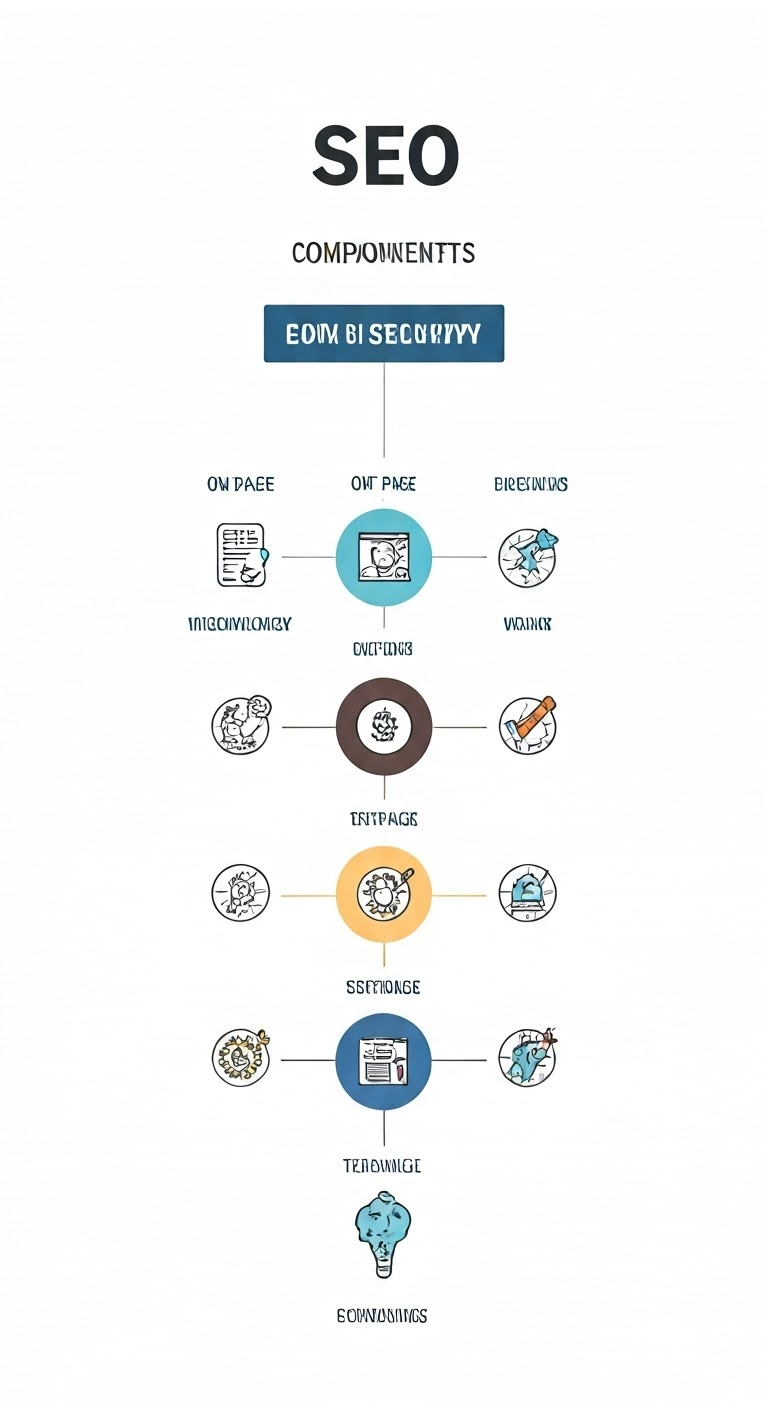
SEO has three main parts: on-page SEO, off-page SEO, and technical SEO. These parts work together to build a strong and effective SEO strategy.
On-page SEO is about improving content and HTML code on your website. It helps search engines and users understand your site better. This includes using the right keywords, making quality content, optimizing title tags and meta descriptions, and having a clear and easy-to-navigate website structure. Off-page SEO focuses on enhancing your website’s authority and reputation through activities that happen outside your site. Technical SEO covers the behind-the-scenes work that impacts how search engines see and crawl your website.
On-Page SEO: Optimizing Content for Search Engines
On-page SEO is all about making sure your website’s content can rank well in search results. This means you need to optimize your blog posts, product pages, landing pages, and even the homepage.
The key to on-page SEO is to create quality content that your target audience will find valuable. You should focus on writing eye-catching headlines, useful body text, and including relevant keywords. This helps search engines know what your content is about.
There are also some technical parts to think about. Optimizing title tags, which are the clickable headlines in search results, is important for getting more clicks and improving your click-through rate (CTR). Also, don’t forget about meta descriptions. These are short summaries that appear under the title tag in search results. They give users an idea of what your page contains.
Off-Page SEO: Building Authority Outside Your Website
Off-page SEO is like making your website more known through word-of-mouth. When other trusted websites link to your content, it’s like getting a thumbs-up from a reliable source.
A big part of off-page SEO is link building. This means getting high-quality backlinks from other top sites in your field. Social media also helps with off-page SEO. By interacting with your audience on social media, you can improve your brand’s visibility, bring more visitors to your website, and even gain important backlinks.
Here are a few ways to improve your off-page SEO:
-
Guest blogging on relevant websites
-
Participating in industry forums and online communities
-
Submitting your website to relevant directories
-
Engaging in social media marketing
Technical SEO: Ensuring Search Engines Can Crawl and Index Your Site
Think of technical SEO like building a strong base for a house. A good foundation keeps the house stable. Similarly, technical SEO helps search engines crawl and index your website easily. It means improving different hidden parts that affect how search engines work with your site.
One important part of technical SEO is having a clear and organized site structure. A good layout, with categories and subcategories, helps search engines understand how your web pages are connected. This is especially important for larger websites.
Another key part of technical SEO is checking for and fixing crawl errors regularly. Crawl errors happen when search engines have trouble accessing some of your website’s pages. Google Search Console is a useful and free tool from Google. It helps you track your website’s performance in search results, find crawl errors, and submit your sitemap to Google directly.
Preparing for SEO: What You Need to Get Started

Before you jump into using SEO, it’s good to collect the right tools and learn about helpful resources. SEO tools act like good friends that make it easier for you to improve your site and understand how it’s doing.
In addition to these tools, Google Analytics is very important for keeping an eye on your website traffic, how users act, and tracking conversions. Also, Bing Webmaster Tools is great if you want to make your website work better for Bing’s search engine.
Essential SEO Tools and Resources
Many SEO tools are available, both free and paid. They can help with different parts of optimizing your site. Keyword research tools, like SEMrush, Ahrefs, and Google Keyword Planner, help you find the right keywords, check their search volume, and look at the competition.
Buying SEO software like SEMrush or Ahrefs can give you more detailed data and features, such as checking backlinks, studying competitors, and performing site audits. These tools provide a lot of useful information to help you see your website’s strengths and weaknesses and find ways to improve it.
There are also many valuable resources on the internet. For example, Google Search Central, which used to be called Google Webmaster Tools, offers plenty of information, guidelines, and best practices straight from Google.
Understanding Your Website’s Current SEO Performance
Before implementing changes, it is important to first understand your current SEO performance. This involves analyzing various metrics that reflect your website’s visibility and effectiveness in search results. By understanding your baseline performance, you can measure the impact of your SEO efforts over time.
Tools like your search console and Google Analytics are invaluable for gathering these insights:
|
Metric |
Description |
|---|---|
|
Organic Traffic |
The number of visitors who arrive at your website through organic search results (as opposed to paid advertisements or other channels). |
|
Keyword Rankings |
The position at which your website appears in search results for specific keywords. For example, a keyword ranking of #3 means that you appear as the third result on the SERP. |
|
Backlinks |
Links from other websites to yours, indicating authority and credibility in the eyes of search engines. |
|
Bounce Rate |
The percentage of visitors who leave your website after viewing only one page, signaling potential issues with user experience or content relevance. |
|
Conversion Rate |
The percentage of visitors who complete a desired action on your website, such as making a purchase or filling out a contact form. |
By monitoring these metrics, you can identify areas of improvement, track your progress, and make adjustments to your SEO strategy to achieve better results.
A Beginner’s Guide to Implementing SEO
Implementing SEO does not have to be hard. You can make it easier by breaking the process into small steps. This way, you can improve your site’s visibility and get more visitors over time. To create a good SEO strategy, you need to know your target audience. Understand how they search and make relevant content that meets their needs.
Keep checking how you are doing. Look at the data and adjust your strategy as SEO changes. This will help your website succeed in the long run. Remember, SEO is not just a one-time task. It is something you need to keep working on.
Step 1: Keyword Research and Selection
Keyword research is very important for any good SEO plan. It means finding out the words and phrases that your target audience uses when searching for information, products, or services that relate to your website. By knowing the language your audience uses, you can adjust your content to match their search needs.
Start by making a list of themes that connect to your website or business. Consider the questions your audience may have, the problems they want to solve, or the specific products or services they may look for. Use tools like Google Keyword Planner, Ahrefs, and SEMrush to help you with your keyword research. These tools give you useful information, like keyword search volume – the number of people searching for that keyword each month – and competition level, showing how tough it might be to rank for that keyword.
After gathering a good list of keywords, put them in order by their relevance, search volume, and competition level. Focus on keywords that closely match your content and have a fair amount of searches. This way, you can have good visibility without making it too hard to rank.
Step 2: Creating SEO-Friendly Content
Content is very important for SEO. In today’s digital world, people receive a lot of information. It is essential to stand out by creating high-quality, relevant content that connects with your target audience.
Start by knowing what your audience needs and likes. What challenges do they face? What information do they want? What questions do they need answers to? Making content that speaks to these needs will grab their attention and help you build your online presence as a trusted source.
Once you know your audience well, add relevant keywords into your content naturally. Avoid keyword stuffing, which means forcefully putting in too many keywords. This can hurt your rankings. Instead, focus on a natural flow that makes your content both helpful and easy to read.
Step 3: On-Page Optimization Techniques
On-page SEO means improving individual web pages. The goal is to help them look better to search engines. This can lead to higher rankings in search results. It involves changing both the content and the HTML code. The code shows search engines what your website is about.
Start by changing your title tags. Title tags are short and clear titles that show up in search engine results. Make sure to use relevant keywords in your title tags. They should also reflect what the page is about. Next, create engaging meta descriptions. Meta descriptions are short summaries that appear below the title in search results.
Don’t forget about images. Optimize them by using descriptive alt text. Alt text explains the image and its meaning to search engines. This is also important for users with screen readers. Alt text helps them understand images they can’t see.
Step 4: Off-Page Optimization Strategies
Off-page optimization looks at things you can do outside your website to improve your search engine rankings. One key part of off-page SEO is building high-quality backlinks. These are links from other trusted websites to yours. They act like votes of confidence for search engines.
Using social media can really help you build brand awareness. It allows you to connect with your audience and bring referral traffic to your website. You should make it easy for visitors to share your content on their social media profiles. Also, guest blogging on related websites can help you get backlinks, reach more people, and show that you are an expert in your field.
Here are a few ways to boost your off-page SEO:
-
Engage with influencers in your industry.
-
Participate in online forums and communities.
-
Submit your website to relevant directories.
Step 5: Technical SEO Checklist
Technical SEO looks at the important things on your website that help search engines find and understand your pages. Keeping these technical parts in good shape can really boost your rankings.
First, work on your site structure. It’s best to have a clear setup with main categories and smaller subcategories, especially if your website is large. This makes it easier for search engines to find their way around and see how your pages are related. You should also create a sitemap and send it to search engines. This will help them find and list all your website’s pages.
Think about using structured data or schema markup. This helps search engines get more information about your content. Using schema markup can make your search listings look better with rich snippets, making them stand out more in the search results.
Advanced SEO Strategies
As you learn more about the basics of SEO, take your knowledge further by looking into advanced strategies that can help your website stand out. The world of SEO is always changing. So, it’s essential to keep up and change your plans as needed.
Think about how mobile optimization and artificial intelligence affect today’s SEO methods. Make sure your website is ready for voice search. This means your content should be short, conversational, and match how people usually ask their questions. By adopting these new ideas, you can keep your website visible and accessible to more people.
Mobile Optimization and Its Impact on Rankings
In today’s world, many people use their smartphones to access the internet. Google has recognized this shift and now ranks mobile-friendliness high in its search results. If your website is not set up for mobile use, you may lose traffic and potential customers to those who have adapted to a mobile-first strategy.
To make your website mobile-friendly, it should be responsive, load fast on mobile networks, and provide a smooth user experience on different screen sizes. Pay attention to details like font size, where buttons are placed, and how images are shown. This will help your content be easy to read on smaller screens.
To make the user experience better, try to keep scrolling to a minimum, create easy navigation, and have clear call-to-action buttons. These should help guide users to what they need. Keep in mind that mobile optimization is crucial for SEO and should be an important part of your overall plan.
The Role of Artificial Intelligence in SEO
Artificial Intelligence (AI) is quickly changing digital marketing, including SEO. AI can look at large amounts of data, find patterns, and make predictions. This is changing how businesses work on search engine optimization.
AI tools are now important for tasks like keyword research, content creation, and technical SEO. These tools can check how well your website performs, find any technical mistakes, and give suggestions on how to improve things using data.
As AI grows, focusing on user experience is more important. Search engines like Google are favoring websites that provide good content, easy navigation, and a positive experience for users. By using AI tools and thinking about user experience, you can build a website that ranks better and keeps visitors interested.
Voice Search Optimization: Preparing for the Future
Voice search is quickly changing how people use search engines. This is due to virtual assistants like Siri, Alexa, and Google Assistant. More people are using voice commands on their mobile devices and smart speakers. So, it’s important for businesses to optimize for voice search to keep up in the digital world.
Voice search tends to use longer and friendlier phrases compared to regular text searches. People who use voice search often want specific information or need to do something, like finding a local business, getting directions, or making a reservation. Changing your SEO strategy to include voice search can help you reach this growing group of search users. This allows you to connect with potential customers who use voice-activated devices to explore online.
You should add long-tail keywords and natural phrases in your content. This approach aligns with how people ask questions in conversation. Think about creating FAQ pages or sections that answer common voice search questions about your products, services, or industry.
Common SEO Mistakes to Avoid
Even when you mean well, it’s simple to make common SEO mistakes. These errors can hurt your website’s performance. If you ignore basic on-page optimization or forget about user experience, your website might not reach its full potential.
By avoiding these common mistakes, you can build a strong base for your SEO work. This will help your website grow in the changing online world. Keep in mind that SEO isn’t about skipping steps. It’s about sticking to best practices.
Overlooking User Experience (UX)
Many SEO strategies forget to focus on user experience (UX), which is very important. Ignoring UX can hurt how well a site performs in search results. User experience includes things like how fast a site loads, how it works on mobile, easy navigation, and interesting content. If these parts are not considered, visitors may leave quickly, leading to a high bounce rate and low engagement. This tells search engines that the site may not contain useful information. When you prioritize UX, it helps improve SEO performance and satisfies users. In short, combining UX with SEO is necessary for good online visibility and lasting success.
Ignoring Mobile Responsiveness
Most people on the internet use mobile devices to look at websites. Because of this, making sure your website works well on mobile is a must, not an option. If you don’t optimize for mobile, it can hurt your search engine ranking and mean you lose valuable visitors.
Being mobile-responsive isn’t just about making your website fit smaller screens. It’s also about giving a smooth user experience on all devices, like desktops, tablets, and smartphones. This involves making your website’s design, layout, and content easy to read, navigate, and enjoyable for anyone using any device.
If you focus on mobile responsiveness, you can boost your chances of getting a better ranking on search engine results pages. It will help provide a good experience for most internet users and keep you from being penalized by Google. They clearly prefer mobile-friendly websites.
Duplicate Content Issues
Having a lot of content on your website is important. However, it is also important that your content is unique and not copied on different pages. Duplicate content can confuse Google search and other search engines. This confusion makes it hard for them to decide which content is the most relevant for a search.
When Google finds duplicate content, it might rank one version higher than others. Sometimes, Google may even remove all duplicated content from the search results. This can hurt your website’s visibility and organic traffic. It stops your target audience from finding and interacting with your valuable content.
To help with this, use canonical tags. These tags show search engines the preferred version of the content. If you have many pages with similar information, think about combining them into one complete page. Then, you can redirect the other pages to this main one.
Measuring SEO Success
After putting time and effort into SEO strategies, it’s important to check how well they are working. You need to see what is successful and what needs fixing. Keeping an eye on key performance indicators (KPIs) gives you good information about your SEO performance. It helps you make changes based on data.
Looking at your website’s analytics often allows you to see your progress. This can help you find areas to grow and show the return on investment (ROI) of your SEO work. Remember, SEO is a process that needs regular checks and updates to be successful in the long run.
Key Performance Indicators (KPIs) for SEO
Key performance indicators for SEO are important to track how well your optimization is working. KPIs like organic traffic, keyword rankings, and conversion rates give you a look at your SEO performance. Keeping an eye on these metrics helps you understand how your strategies affect search engine visibility and user engagement. Checking bounce rates, click-through rates, and dwell time gives you useful information about how users behave and how relevant your content is. By setting clear KPIs that match your SEO goals, you can see your progress and change your strategies for better results. Regularly reviewing these metrics helps make sure your SEO efforts are achieving meaningful outcomes and improving online visibility.
Using Analytics to Track SEO Progress
Analytics is very important for tracking your SEO progress and understanding how your website performs in search results. Tools like Google Analytics and Google Search Console give lots of data. However, it can be hard to manage if you don’t know what to focus on.
Start by setting clear goals for your SEO strategy. What do you want to achieve? More website traffic? Better rankings for certain keywords? Once you know your goals, you can change your analytics dashboard to highlight the metrics that matter most.
Keep an eye on metrics like organic traffic, keyword rankings, backlinks, and bounce rate. By regularly checking your website’s analytics, you can see how well your SEO strategy works. You can find areas that need improvement and make smart choices to boost your website’s visibility and overall performance in search results.
Staying Updated with SEO Trends
The world of SEO is always changing. New trends and algorithms come up all the time. It is important to keep up with these changes to keep and improve your online visibility. You should always be learning to adjust your SEO strategies.
Read trusted industry blogs, join webinars, and be a part of online groups to learn more. By staying curious and active in your search for SEO knowledge, you can help your website do well in the fast-changing digital world.
The Importance of Continuous Learning in SEO
In the world of digital marketing, learning all the time is very important, especially for search engine optimization (SEO). Search engine algorithms change a lot, new trends pop up, and best practices are always getting better. What works well today might not be effective tomorrow.
It’s key to spend time keeping up with the latest SEO trends, updates, and strategies. If you fall behind, you might lose important organic traffic, drop in rankings, and miss chances to reach customers who are searching for businesses like yours online.
You can learn in many ways. Read industry blogs and articles, listen to podcasts, join webinars, and participate in online communities and forums. By making learning part of your routine, you’ll be ready to adjust to the changing world of SEO.
Recommended Blogs and Websites for SEO Updates
To keep up with the fast-paced world of SEO, you need to stay updated on trends, algorithm changes, and best practices. Luckily, there are many resources available that provide useful tips from experts in the field. Websites like Search Engine Land give detailed news and analysis about the SEO industry.
Don’t overlook the importance of following experts on social media platforms such as Twitter and LinkedIn. Joining discussions, asking questions, and being part of relevant groups can provide great insights. The SEO landscape is always changing. By exploring these suggested blogs and websites, you can stay ahead of the game.
Make sure to keep an eye on official sources like Google Search Central, which shares guidelines and best practices directly from Google. By staying informed, you can adjust your strategies and marketing campaigns to match the latest updates. This will help ensure that your website stays visible and competitive.
Conclusion
In conclusion, SEO is very important for digital marketing. It can greatly improve your online visibility and help you succeed. To make the most of SEO, learn the basics of SEO, and optimize your content on and off your site. Keep up with the latest trends and strategies. This will improve your website’s performance and draw in more organic traffic. Avoid common mistakes. Track your progress with key performance indicators. Always adjust to changes in the SEO world for long-term success. No matter if you are new or want to use advanced strategies, investing in SEO is vital. It helps you create a strong online presence and reach your target audience effectively.
Frequently Asked Questions
What is the difference between on-page and off-page SEO?
On-page SEO means improving things directly on your website. This includes making your content better and fixing the HTML structure. Off-page SEO, on the other hand, is about creating backlinks and increasing your site’s authority. This is done through actions outside your site, like using social media and guest blogging.
How long does it take to see results from SEO?
SEO results take time and patience. The time it takes can be different for everyone, but you usually need several months to see clear changes in organic search traffic and search engine rankings. Keep in mind that SEO is a long-term effort.
Can I do SEO on my own or should I hire a professional?
Doing SEO yourself is possible, but getting help from an SEO professional can be very helpful. These experts have the skills and tools needed to create and carry out an SEO strategy designed specifically for your business needs.
How often should I review my SEO strategy?
Regularly checking your SEO strategy is very important. This is because search engine algorithms and industry trends change all the time. Try to do a complete review at least two times a year or whenever there are big updates from Google.
Are backlinks still important in 2023 for SEO?
Backlinks are very important for ranking in 2023 and in the future. High-quality backlinks show that other websites trust your content. They tell search engines that your information is valuable and reliable.