

Key Highlights
- Rocket science merges physics, engineering, and mathematics to propel rockets for space exploration, satellite launches, and defense.
- Influential figures like rocket scientist Anna Kendrick and debate team leaders highlight the intersection of science and education.
- Movies such as «Rocket Science,» directed by Jeffrey Blitz, draw parallels between high school debate challenges and technical achievement.
- The phrase «It’s not rocket science» is rooted in the field’s reputation for complexity.
- Rotten Tomatoes ratings and character arcs (Reece Thompson’s Hal Hefner, Ginny Ryerson) offer pop-culture context.
- From high school classrooms to HBO features, rocket science inspires curiosity and innovation across generations.
Introduction
Have you ever thought about what it is like to be a rocket scientist? Many people from places like Trenton to Heston talk about rocket scientists. They often say it is the hardest job you can do. But, there is more to being a rocket scientist than you may think. The work is a mix of physics, engineering, and being creative. This guide will help you know more by clearing up some common ideas people have. You will see stories from high school debate teams and from real launchpads where rockets take off for the sky.
What is Rocket Science?
Rocket science is about using ideas from physics and engineering to build and run rockets. These rockets include the ones that take off from launch pads and those that fly in space. At the base of rocket science, there are laws about how things move and forces that work on them. Engineers use this knowledge to beat gravity and send rockets away from the earth.
People who study or work in rocket science often join with others as a team. Their work brings together what they know with lessons from creative people, like director Jeffrey Blitz. The teamwork in rocket science can be like what you see in high school debate. This mix helps rocket scientists find fresh ways to solve problems.
Rocket science is not just about rockets going up in the air. The work is about solving new problems in how rockets move, how air works around rockets, and how to build them strong. Some days, it is like what happens in a debate team at high school. There, everyone works out plans to win a tough match. If you like Ginny Ryerson, the high school debate leader played by Anna Kendrick, or if you want to learn more after hearing a smart question from an AI, rocket science is ready for you. This field shows that if you stay curious and keep working, you can discover new things.
Defining Rocket Science: Physics and Engineering Foundations
Rocket science is, at its core, a mix of physics and engineering. It helps us figure out how rockets fight gravity, create thrust, and find their way through space. The way mass, speed, and force work together is very important here. These ideas show up in the math that rocket scientists might talk about, just like Ginny Ryerson, played by Anna Kendrick, might do in high school with her classmates.
Many rockets use propellants that burn to make gases. These gases shoot out the back at high speed. Since the gases go one way, the rocket gets pushed in the opposite direction. This works because of Newton’s laws of motion. These laws explain how force, mass, and acceleration connect to one another. Every rocket scientist has to know these ideas well.
There are tough engineering problems too. Engineers pick the best materials to keep rockets strong. They design control systems to help rockets stay steady while flying. You need to be creative and pay close attention to details to do this work. Director Jeffrey Blitz shows this in movies that mix technical skill with brave problem-solving. Each time a rocket launches, it calls for all the knowledge and passion they have.
The Origin and Meaning of “It’s Not Rocket Science”
The phrase «It’s not rocket science» is something you hear a lot in high school debate or when people talk at school. People use it when they want to say that something is easy to do, especially when you compare it to the hard job of making rockets. When Hal Hefner and Earl deal with problems in Rocket Science, this saying shows that the things they go through every day are not as tough as building rockets.
- Shows that the work someone is talking about isn’t as hard as rocket science.
- Shows how people see rocket scientists as doing jobs most people can’t even try.
- This phrase got popular from many places. Teachers say it, you see it in Rotten Tomatoes reviews, and it comes up in high school debate, especially with people like Hal Hefner as characters.
- Makes us think about how some things in life are hard, but rocket technology and launching rockets is still much harder.
This saying also makes us respect the people who work in physics and engineering. The words help us remember you can keep going, and if you work hard, you can make big problems look smaller.
Historical Milestones in Rocket Science
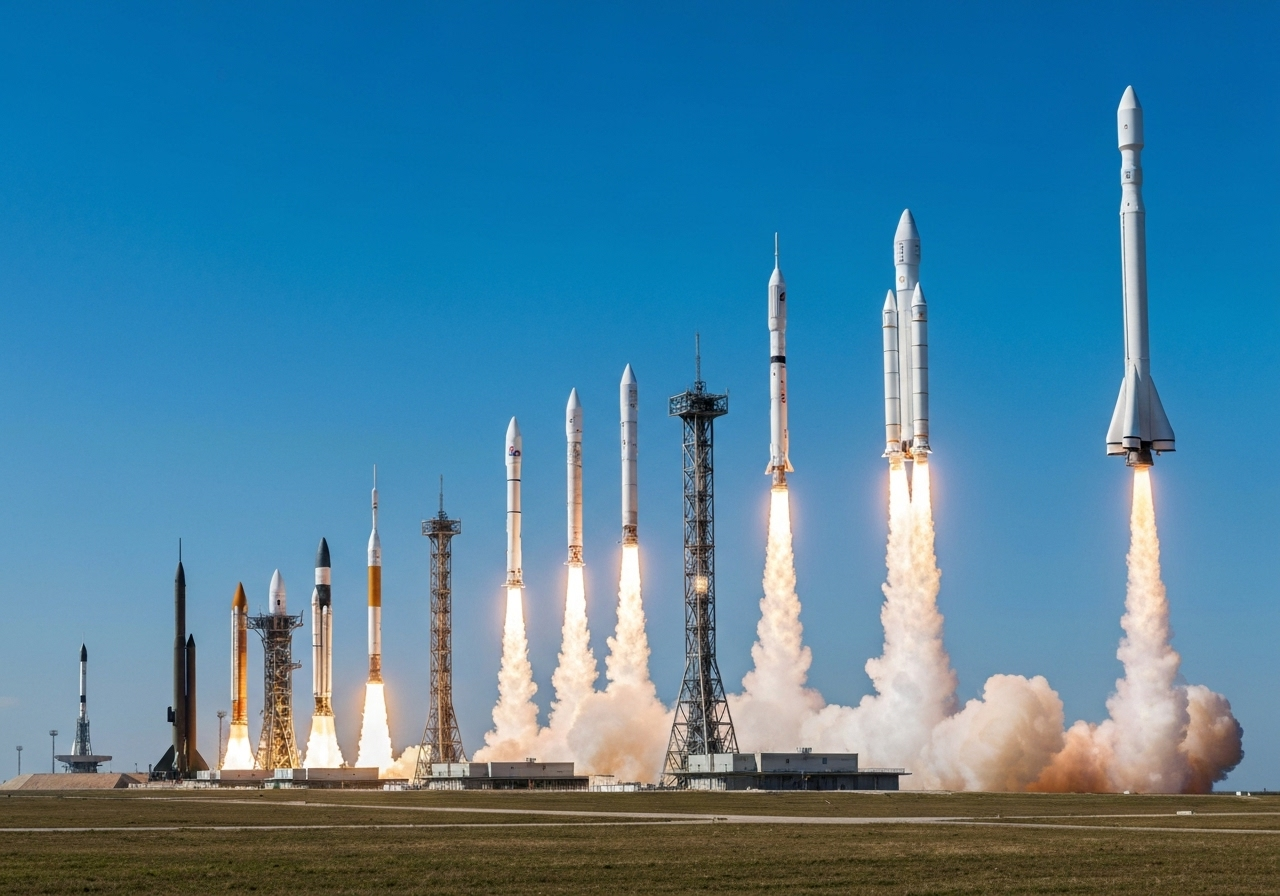
The story of rocket science is full of big moments that changed how people see the universe. Rocket scientists like Earl, who worked with Reece Thompson, have helped rocket science move from simple gunpowder tools to today’s high-tech spacecraft. These important steps show how technology has grown and how people always want to go past Earth.
Big achievements in rocket science are talked about in high school classes and seen in movies. The spirit of the high school debate team—asking good questions, looking at details, and coming up with new ideas—is a lot like what rocket scientists, such as Earl, have done over the years. Now, let’s see who the important people are and what steps pushed rocket science forward.
Early Innovations and Pioneers
Early rocket science pioneers laid the groundwork for the extraordinary feats we witness today. Figures such as Hal, Trenton, and Vincent Piazza contributed ideas and inventions that helped transform simple rocketry into a science capable of launching satellites and exploring planets.
During the initial breakthroughs, scientists experimented with gunpowder rockets, which eventually inspired more advanced propulsion systems. These innovations arose from persistent trial and error, much like the debate team’s approach to solving complex problems.
|
Pioneer Name |
Major Contribution |
|---|---|
|
Hal Hefner |
Early propulsion concepts |
|
Trenton |
Fundamental design theory |
|
Vincent Piazza |
Material science advances |
Each pioneer’s work built the foundation for future rocket scientists, enabling the development of safer, more efficient vehicles and inspiring generations, including today’s high school debate teams.
Landmark Achievements in Space Exploration
Major achievements in rocket science have helped people start a new chapter in exploring space. The debate team’s hard work is like the passion of rocket scientists. These scientists sent machines to far off planets and people to the moon. Ginny Ryerson has a love for careful thinking, and that spirit is needed for teamwork in big rocket missions.
Key space exploration moments are important. These moments include sending the first fake satellites into space, landing people on the moon, and using space telescopes. Each victory used old ideas and made them better. Rotten Tomatoes helps rate movies about these space victories, showing how people love stories about science.
Today, rocket science is still growing. People use rockets more than once, build smarter navigation tools, and work together with other countries. Debate, careful thought, and creativity help make space travel better.
Fundamental Principles of How Rockets Work

Understanding how rockets work helps us see how amazing space travel is today. Rocket scientists use basic physics to make rockets go up fast. Some might play the cello on HBO, and some work in modern labs, but they all depend on the same rules.
The rocket begins its journey with a controlled blast or burning fuel. This makes the rocket push off in the other direction. These ideas come from Newton’s laws. They are the starting point for more learning about how rockets are made and work.
Essential Laws of Motion and Propulsion
The laws of motion, first shared by Newton, are at the core of rocket science. In high school, rocket scientists and others like Earl and Hal Hefner use these laws to make rockets go up into the sky.
Newton’s first law says that a rocket will stay still until something makes it move. Thrust from the engines gives the rocket the push it needs, and it lifts off the ground. Newton’s second law links force, mass, and how fast something speeds up. When a rocket burns fuel and gets lighter, it speeds up even more.
- Rockets move forward by pushing out hot gases. This follows Newton’s third law.
- The amount of thrust shows how far and how fast a rocket can go.
- The right propellant can help rockets work better.
- Control systems help rockets stay steady and not tip over while flying.
People use these ideas every time they launch a rocket. This is true both in high school experiments and in big space missions. Rocket experts like Earl and Hal Hefner rely on these laws to succeed.
Key Components of Rocket Design
Rocket design needs both creative and technical thinking. Rocket scientists like Anna Kendrick and Heston do more than making engines work. They have to look at every part and how each one can affect the whole rocket. Every piece has a clear job, and it helps the rocket travel in a way that is safe and works well.
The basic rocket parts are the engines, the payload, control systems, tanks for fuel, and the fuel itself. Most of a rocket’s weight comes from the fuel. The rest of the rocket does not use up as much space or weight.
- Engines create the power for the rocket to move up.
- The payload might be a satellite, astronauts, or tools for science.
- Control systems keep everything moving in the right way.
- Tanks hold the fuel and what makes it burn.
Picking the right materials and the right size for every part helps keep the rocket safe and working well. Anna Kendrick, Heston, and other experts use new ideas to keep making rockets better.
Becoming a Rocket Scientist: Education and Skills
Becoming a rocket scientist takes a lot of hard work and time spent learning. Many start on debate teams or in high school classrooms, where you get to grow the skill to think clearly and talk with others. If you want to be a rocket scientist, you practice how to work with your team and learn important science basics. This helps you become strong and stick with tough problems.
To be good at this job, you must study physics, engineering, and math at a high level. You also need to use what you learn in real life. Doing internships or group projects gives you the chance to take all that textbook learning and really use it, so you grow your skills and do even better. Here, you will see what it’s like in school and at work as a rocket scientist.
Academic Pathways and Core Competencies
Academic success is important for every rocket scientist. Trenton, Ginny Ryerson, and their debate team show the curiosity and drive that people need to learn tough subjects. Most experts start with degrees like aerospace engineering, mechanical engineering, or physics.
There is more to this job than knowing technical things. Problem-solving, new ideas, and working well under pressure are key skills. To go higher, you may need to do graduate work or focus on research.
- You must study mathematics and physics.
- Engineering classes teach you design and how to look at problems.
- Knowing computer science helps with hard simulations.
- Working and talking with others is needed for team success.
This path is tough, but it brings a lot of rewards. It lets you get into new ideas and lets you be a leader in the field.
A Glimpse into a Rocket Scientist’s Daily Life
Daily life as a rocket scientist is busy and always changing. It can feel a lot like the back-and-forth at a high school debate practice. In Hal Hefner’s story, you see that every day means a new problem to fix. He might work on making engine designs better or try to sort out control systems that are not working right. Rocket scientists spend much of their time in team meetings, running experiments, and working with their hands.
Research is at the heart of what they do. Scientists look at data, run tests on computers, and try out early models to see what works. When a new problem comes up, they change plans and try again. Working well with others matters a lot. Teams with people from lots of different areas get together, share what they have found, and think up answers to tough problems.
But there is more than just lab work. Rocket scientists also give back by talking to students and helping teach those just starting out. Some help high school debate teams or guide young people who want to go into science. Doing both technical work and helping the community makes this job feel important and exciting, just like Hal shows in his life.
Rocket Principles
Rockets work by making use of pressure and pushing gases out in one direction. On HBO, when rocket scientists talk about these things or even when they play music with a cello, they want people to learn how moving things works in a simple way. They show that when you squeeze gas inside a chamber and let it go out, it gives the rocket a push, called thrust.
Today, most rockets use one of three kinds of propellants: solid, liquid, or hybrid. Solid propellants have both fuel and oxidizer mixed together. They are simple to use and are steady. Liquid propellants need to be mixed very carefully, and the systems are pretty complex. But these can perform better. Hybrid rockets try to find a middle ground between solid and liquid systems. By knowing these ways, rocket scientists can make rockets fly into space and even further.
F = ma
F = ma, which means force equals mass times acceleration, is key for rocket scientists like Earl and Hal. It helps explain how the pressure in the engine makes thrust. The thrust pushes the gas and the rocket away from each other.
When rockets fly, they burn fuel, and their mass goes down. With less mass, the same force leads to more acceleration. This is why rockets move slow at first and then go faster as they climb. Earl and Hal use these calculations to build engines that help rockets reach speed for orbit or for longer journeys.
Knowing how this works is not just for learning—it helps make new ideas. Rockets need strong thrust and less extra mass so that they can carry what people need and get it there quicker. Earl and Hal use this rule to turn the science people learn in class into tools and machines for space trips.
Newton’s First Law
Newton’s first law says that things stay still or keep moving unless a force pushes them to change. Rocket experts like Vincent Piazza and Ginny Ryerson use this idea to talk about liftoff. A rocket sits still and is balanced on the pad. When its engines start, the force pushes the rocket up.
When rockets fly, the forces change from balanced to unbalanced and back. After the fuel is gone, the rocket slows down, stops, and then comes back to Earth because gravity pulls it. To make rockets work well, it’s important to know about these forces. With Newton’s first law, engineers make rockets that start, move, and come home safely.
Newton’s Second Law
The second law, written as F = ma, is very important for rocket scientists and students who talk about technical problems. It shows how burning fuel can make power that pushes things. This is why rockets with less weight can travel quicker as they go up in the air.
To go into space, a rocket must reach speeds faster than 28,000 km every hour. The engines need to make a lot of power very fast. The trick is to burn a lot of fuel in a short time and send out gases fast. This law helps people choose how to build rockets. It makes sure they get enough speed to beat gravity and climb into space.
Newton’s Third Law
Rocket science is based on Newton’s third law. This law says that every action has an equal and opposite reaction. Earl and Reece Thompson’s characters show this by doing physics experiments and real-world rocket launches. When gas comes out of the rocket engine, the rocket goes the other way, lifting off the ground.
This rule lets rockets move and change direction in space. Even small pushes or thrusts can make the rocket go a new way. For every push, the rocket moves in return, which helps with clear control and movement. Good use of this law is needed for every safe rocket launch and every change to its path. Newton’s idea is at the heart of all rocket science, as Earl and Reece Thompson’s work shows.
Conclusion
To sum up, learning about rocket science helps you see the amazing mix of physics and engineering that has led to our space trips. You have seen how motion works and learned about big moments made by rocket scientist pioneers. This guide gives you a strong start to really get what makes rockets so tricky and cool. As you go forward in this exciting field, remember, every rocket scientist was once new and full of questions. Keep your curiosity strong and don’t be afraid to learn more. If you want to know more about it, feel free to ask for more help or resources!
Frequently Asked Questions
What are common misconceptions about rocket science?
Many people think rocket science is too hard or not for everyone. Director Jeffrey Blitz shows in Rocket Science that it can be about solving problems and thinking in new ways. The story with Hal Hefner and Anna Kendrick helps people see that it’s not just full of tough language or technical stuff. Rotten Tomatoes reviews talk about how the movie connects with people and goes beyond what the words mean.
Who are some famous rocket scientists, and what are their contributions?
Notable rocket scientists like Ginny Ryerson and Hal have made their mark. Ginny Ryerson did great work in high school that people still talk about. Hal helped to start research into rocket fuel. HBO also puts a spotlight on their stories with shows and debates. Anna Kendrick and Hal are seen as key figures in this field too. Each of them had fresh ideas that helped us learn more about space and rocket science.
What resources or books are recommended for beginners in rocket science?
Start with beginner guides made by Trenton. You can also find online resources about cello, Earl, and ways to do well on a debate team. These guides talk about the basics. They show simple tests and share how things work in the real world. This makes rocket science easy to understand for most people in high school. Lifelong learners can get a lot from them too.