
Unveiling Artificial Intelligence: A Comprehensive Guide

futuristic digital brain with blue circuits

Key Highlights

  • Artificial intelligence is a branch of computer science focused on creating machines that simulate human intelligence and learning.

  • AI systems operate through machine learning and deep neural networks, which learn from vast amounts of data to make predictions.

  • The field includes Narrow AI, designed for specific tasks, and the theoretical Artificial General Intelligence (AGI), which would possess human-like cognitive abilities.

  • Real-world applications of AI are transforming various industries, from healthcare and finance to transportation and entertainment.

  • Generative AI, a recent breakthrough, can create original content, while natural language processing allows machines to understand human language.

Introduction

Welcome to the fascinating world of artificial intelligence! You’ve likely heard the term, but what does it really mean? From the virtual assistants on your phone to the complex systems that power self-driving cars, AI is rapidly becoming a part of our daily lives. This field of computer science is dedicated to building machines capable of simulating human intelligence, including learning, problem-solving, and decision-making. This guide will explore the core concepts of AI, how it works, and its impact on modern technology.

Defining Artificial Intelligence

So, what exactly is artificial intelligence and how does it work? At its core, artificial intelligence is technology that gives computers and machines the ability to mimic human-like learning, understanding, and creativity. These AI systems can perceive their environment, comprehend human language, learn from new information, and even make independent decisions.

How do experts define artificial intelligence? The formal definition of AI has evolved since the term was first coined. Generally, it refers to the theory and development of computing machinery capable of performing tasks that typically require human intellect. It’s about creating intelligent machines that can reason, solve problems, and adapt.

What is artificial intelligence?

At its essence, artificial intelligence involves giving a machine the ability to learn from experience and adjust to new inputs to perform human-like tasks. The goal is to create computer systems that can function intelligently and independently. This concept was first formally introduced by computer scientist John McCarthy in 1956, who defined it as «the science and engineering of making intelligent machines.»

The modern definition of AI differentiates computer systems based on rationality and action. It’s not just about «thinking» like a human but also «acting» rationally to achieve a specific goal. This involves complex processes like learning, reasoning, and self-correction.

Ultimately, these intelligent machines are designed for decision-making based on the data they process. They analyze patterns and structures within data to acquire skills, much like a person learns. This allows an AI to do everything from recommending a product you might like to identifying fraudulent transactions.

Key characteristics of AI systems

What sets AI systems apart from traditional software? They are defined by a unique set of techniques that allow them to perform both specific tasks and highly complex tasks with a degree of autonomy that mimics human intelligence. This ability to learn and adapt is a fundamental characteristic.

Instead of being explicitly programmed for every possible scenario, AI systems use data to train themselves. Their key characteristics include:

  • Automation: Performing high-volume, repetitive digital and physical tasks without fatigue.

  • Adaptability: Using progressive learning algorithms to adjust as they are exposed to new data.

  • Data Analysis: Processing massive and deep data sets to find hidden structures and patterns.

  • Accuracy: Achieving incredible precision through deep neural networks, which improves with experience.

This capacity for continuous improvement and advanced problem-solving makes AI a powerful tool. It goes beyond simple automation to add a layer of intelligence that can augment and enhance human capabilities across countless applications.

How Artificial Intelligence Works

Have you ever wondered about the mechanics behind AI systems? Artificial intelligence functions by combining large amounts of training data with fast, iterative processing and intelligent algorithms. This allows the software to learn automatically from patterns or features within the data, rather than being explicitly programmed for every step.

A key component of this process is the neural network, which is used in deep learning models. This subfield of computer science has driven many of the recent AI breakthroughs by enabling models to learn from complex, unstructured data. We will now explore the specific roles of algorithms and neural networks.

Algorithms and data-driven learning

At the heart of AI is the relationship between algorithms and data. Machine learning algorithms are the engines that power AI, and they rely on high-quality training data to function. These algorithms are trained on vast data sets to build a model capable of making predictions or decisions.

This process involves several key techniques that enable computers to learn without direct programming:

  • Supervised Learning: Training algorithms on labeled data sets to classify information or predict outcomes.

  • Unsupervised Learning: Allowing the model to find hidden patterns and structures in unlabeled data on its own.

  • Reinforcement Learning: Enabling a model to learn through trial-and-error, guided by rewards for correct actions.

Through these methods, AI achieves pattern recognition, allowing it to identify trends, categorize information, and make data-driven inferences. The quality and volume of the training data are crucial, as the model’s performance is directly tied to the information it learns from.

The role of neural networks and deep learning

Neural networks are a fundamental building block of modern AI, modeled loosely after the structure and function of the human brain. A neural network consists of interconnected layers of nodes that process information, allowing the system to analyze complex data and identify sophisticated patterns. While classic machine learning models use networks with one or two hidden layers, deep learning takes this concept much further.

Deep learning utilizes deep neural networks, which contain hundreds of hidden layers. This multi-layered structure enables the model to learn from vast amounts of unstructured data without human supervision. It’s the technology behind many advanced AI applications you use daily, from speech recognition to computer vision.

This architecture is particularly effective for creating generative models, which can produce new, original content like text or images. By processing data through many layers, deep neural networks can understand complex relationships and generate outputs that are remarkably nuanced and human-like. For example, IBM’s Deep Blue, which defeated world chess champion Garry Kasparov in 1997, demonstrated the power of advanced computing in strategic problem-solving. [Source: https://www.ibm.com/ibm/history/exhibits/deepblue/deepblue_1.html]

Major Types of Artificial Intelligence

Can you explain the main types of artificial intelligence? Researchers classify AI based on its level of sophistication. The most common distinction is between Narrow AI and General AI. Today, all the AI we interact with is considered Narrow AI, as it is designed to perform specific tasks, like playing chess or recognizing faces.

The other type, Artificial General Intelligence (AGI), represents a theoretical form of AI that would possess a level of general intelligence comparable to or exceeding that of a human. This type of AI remains in the realm of science fiction and future research. Understanding these types helps contextualize AI’s current capabilities and future potential.

Narrow AI vs. General AI

The primary types of artificial intelligence are categorized by their capacity for thought and action. The most prevalent form is Narrow AI, also known as Weak AI. These AI systems are masters of one specific domain. They are designed and trained to complete a single task or a narrow set of tasks, such as a virtual assistant answering questions or a program that plays Go.

In contrast, Artificial General Intelligence (AGI), or Strong AI, is the type of AI often seen in movies. AGI would have the ability to understand, learn, and apply its intelligence to solve any problem, much like a human being. It would possess consciousness, self-awareness, and general intelligence across a wide range of tasks. Currently, no true AGI exists, and developing one faces significant computational and theoretical hurdles.

The distinction between these types of artificial intelligence highlights where the technology is today versus where it could go in the future.

Feature

Narrow AI (Weak AI)

General AI (Strong AI)

Scope

Performs a specific task or a narrow range of tasks.

Possesses the ability to understand, learn, and apply knowledge across various domains.

Intelligence

Specialized for one area (e.g., playing chess, language translation).

Exhibits human-level cognitive abilities and general intelligence.

Current Status

Widely implemented and used in today’s technology.

Theoretical; does not currently exist.

Examples

Siri, Alexa, self-driving cars, image recognition software.

Fictional characters like HAL 9000 from 2001: A Space Odyssey.

Reactive machines, limited memory, and theory of mind

Beyond the Narrow vs. General classification, AI can also be categorized based on its functional abilities. The simplest type is reactive machines. These systems can only react to current scenarios and cannot use past experiences to inform their decisions. They excel at performing specific tasks based on the immediate data they perceive. IBM’s Deep Blue, the chess-playing supercomputer, is a classic example of a reactive machine.

The next level is limited memory AI. This is the category where most modern AI systems fall. These machines can look into the past to a limited extent. Self-driving cars, for instance, use data from the recent past, like the speed and position of other cars, to make decisions. However, this memory is not stored permanently as part of the AI’s experience library.

More advanced, and still theoretical, are the «theory of mind» and «self-aware» AI types. Theory of mind AI would be able to understand human emotions, beliefs, and thoughts, fundamentally changing human-machine interaction. Self-aware AI, the final stage, would have consciousness and self-awareness, a concept that remains firmly in the realm of science fiction.

Machine Learning and Its Relationship to AI

How is artificial intelligence different from machine learning? Many people use these terms interchangeably, but they are not the same. Machine learning is actually a subset of machine learning—a specific application and set of techniques that allow AI systems to learn from data. It is the process that gives AI its «intelligence.»

While AI is the broader science of creating machines that can simulate human intelligence, machine learning is the method by which those machines learn. It involves training a model on large amounts of training data to enable it to make predictions or decisions without being explicitly programmed. Let’s look closer at its core concepts.

Core concepts of machine learning

Machine learning automates the process of building analytical models. Instead of writing code to solve a problem, you provide data to a machine learning algorithm, and it learns how to perform the task by identifying patterns. The foundation of this is training data, which computer systems use to develop their capabilities.

One core concept is supervised learning, where the algorithm is trained on a labeled dataset. This means each piece of data is tagged with the correct output, teaching the model the relationship between inputs and outcomes. This is often used for classification and prediction tasks.

Another approach is unsupervised learning, where the model works with unlabeled data to discover hidden structures and patterns on its own. This is useful for tasks like customer segmentation or anomaly detection. Through these methods, machine learning achieves pattern recognition, enabling AI to make sense of complex information and acquire new skills.

Similarities and differences between AI and machine learning

Understanding the relationship between artificial intelligence and machine learning is key to grasping the technology. The main point to remember is that machine learning is a core component that makes many modern AI systems possible, but it is not the entirety of AI.

Think of AI as the broad, overarching goal of creating intelligent machines. Machine learning is one of the primary methods—a subset of machine learning—used to achieve that goal. While all machine learning is AI, not all AI involves machine learning. Early AI systems, for example, used hard-coded rules and logic trees.

Here are the key distinctions:

  • AI is the broader concept: It encompasses any technique that enables computers to mimic human intelligence, including logic, rules, and machine learning.

  • Machine learning is a specific approach: It focuses on creating algorithms that allow computers to learn from data.

  • The Goal: The ultimate ambition for some in the AI field is to achieve artificial general intelligence, while machine learning is focused on enabling systems to perform specific tasks with high accuracy by learning from data.

Real-World Applications of Artificial Intelligence

What are some real-world examples of artificial intelligence in use today? AI applications are no longer futuristic concepts; they are integrated into our daily lives and transforming various industries. From personalized marketing campaigns to advanced medical diagnostics, the use cases for AI are expanding at an incredible pace.

The ability of AI to analyze data and automate tasks has unlocked new efficiencies and capabilities across the board. These applications of AI range from enhancing customer experiences to solving some of society’s most complex challenges, demonstrating the technology’s potential to augment human abilities rather than just replace them.

Healthcare, finance, and retail innovations

What are the most common applications of artificial intelligence in various industries? In healthcare, AI is revolutionizing patient care and diagnostics. AI applications can analyze medical images like X-rays with incredible accuracy to help pinpoint diseases. Personal health assistants can also remind patients to take medication and encourage healthier lifestyles.

The finance industry relies on AI to enhance security and efficiency. Machine learning algorithms analyze transaction patterns in real-time to detect and prevent fraud. In banking, AI is also used for credit scoring and to automate data management tasks.

Retail has been transformed by AI, which creates highly personalized shopping experiences. Here are a few key use cases:

  • Personalized Recommendations: AI analyzes purchase history to suggest products customers are likely to want.

  • Virtual Shopping Assistants: Chatbots help customers with purchase options and inquiries.

  • Inventory Management: AI forecasts demand to optimize stock levels and site layouts.

  • Computer Vision: Analyzing in-store behavior to improve layout and product placement.

AI in entertainment, transportation, and education

The influence of AI extends far beyond healthcare and finance. In entertainment, AI algorithms power the recommendation engines on streaming services and social media, curating content based on your viewing habits. They can even generate personalized headlines and summaries for articles.

Transportation is on the verge of a major AI-driven shift. Self-driving cars use a combination of computer vision and deep learning to interpret their surroundings and navigate safely. In logistics, AI optimizes delivery routes and manages supply chains to prevent disruptions.

Even education is benefiting from AI innovations. These tools are helping to streamline administrative tasks and create more personalized learning experiences for students. Some key applications of AI include:

  • Virtual Assistants: AI-powered tutors can provide students with extra help and answer questions.

  • Automated Grading: AI can help grade assignments, freeing up teachers’ time.

  • Personalized Learning Paths: AI adapts educational content to a student’s individual pace and style.

  • Image Recognition: This technology can be used in various educational apps to make learning more interactive.

Artificial Intelligence in Modern Technology

Why is artificial intelligence important in modern technology? AI has become a cornerstone of innovation, driving the digital transformation of businesses and creating entirely new technologies. It allows organizations to make sense of the massive amounts of data they collect and turn it into actionable insights.

The recent explosion of generative AI has made the benefits of AI clear to a wider audience. These powerful models are being integrated into existing software, accelerating development and unlocking new creative possibilities. AI is no longer a niche technology; it is a fundamental driver of progress.

AI’s influence on automation and digital transformation

AI is a primary catalyst for automation and digital transformation across industries. By automating repetitive and routine tasks, AI systems free up human workers to focus on more creative and strategic endeavors. This is seen in customer service, where chatbots handle common inquiries, allowing human agents to manage more complex issues.

This technology is also a key enabler of the Internet of Things (IoT). AI can analyze the massive streams of data generated by connected devices in real-time, providing insights for predictive maintenance in manufacturing or smart-grid management in utilities. This ability to process and act on data instantly is crucial for digital transformation.

Ultimately, AI allows businesses to build smarter, more responsive operations. Whether it’s optimizing supply chains, personalizing marketing efforts, or enhancing cybersecurity, AI provides the intelligence needed to compete in a rapidly evolving digital landscape. It helps organizations act on opportunities and respond to challenges with greater speed and accuracy.

Examples of generative AI tools and platforms

Generative AI has captured the public’s imagination with its ability to create new and original content. These deep learning generative models are trained on vast datasets and can produce everything from text and images to code and music in response to a user’s prompt. Large language models (LLMs) are the foundation for many of today’s most popular generative AI tools.

You’ve likely already encountered these tools. For example, virtual assistants have become increasingly sophisticated thanks to generative AI, enabling more natural conversations and complex task completion. The Google Assistant, for instance, leverages these models to understand and respond to user requests effectively.

Here are a few examples of the types of generative AI tools and platforms available today:

  • Text Generation: Models like ChatGPT and Google’s Bard can write essays, emails, and even code.

  • Image Generation: Platforms like Midjourney and DALL-E create high-quality images from text descriptions.

  • Code Assistants: Tools like GitHub Copilot assist developers by suggesting and autocompleting code.

Challenges in Advancing Artificial Intelligence

What are the current challenges facing artificial intelligence development? Despite its rapid progress, advancing artificial intelligence is not without its obstacles. Organizations face significant technical hurdles, including data limitations and the immense computing power required to train complex models.

Beyond the technical aspects, there are critical ethical principles to consider. Issues surrounding data bias, the privacy of personal information, and accountability require careful thought and robust regulatory perspectives. Addressing these challenges is essential for building trustworthy and responsible AI systems that benefit society as a whole.

Technical hurdles and data limitations

One of the biggest technical hurdles in AI development is the dependency on data. Deep learning models require large amounts of data to be trained effectively—often terabytes or petabytes. Acquiring, cleaning, and labeling this data is a massive and expensive undertaking.

Furthermore, AI models can struggle when they encounter new data that differs significantly from their training sets. The world is constantly changing, and models must be continuously updated to remain accurate. Handling this influx of new and often complex data requires robust infrastructure and significant computational resources, typically in the form of powerful GPUs.

Key data-related challenges include:

  • Data Scarcity: High-quality, labeled data can be difficult and costly to obtain for specific tasks.

  • Data Bias: If the training data is biased, the AI model will learn and perpetuate those biases.

  • Data Security: Protecting massive datasets that may contain sensitive information from cyberattacks is paramount.

Ethical considerations and regulatory perspectives

As the use of AI becomes more widespread, ethical considerations and regulatory perspectives are critically important. If AI systems are developed without a focus on safety and ethics, they can lead to privacy violations and biased outcomes. For example, an AI model trained on biased hiring data could unfairly discriminate against certain demographic groups.

To address these risks, the field of AI ethics promotes principles like fairness, accountability, and transparency. A key concept is explainable AI, which aims to make the decision-making process of an AI model understandable to humans. This is crucial for building trust and ensuring that organizations are held accountable for the outcomes of their AI systems.

Important ethical principles guiding the responsible use of AI include:

  • Fairness and Inclusion: Minimizing algorithmic bias to ensure AI systems treat all individuals equitably.

  • Privacy and Compliance: Protecting personal information and ensuring AI systems adhere to regulations like GDPR.

Proper governance and a commitment to these ethical principles are necessary to guide AI development in a direction that aligns with societal values.

Conclusion

In conclusion, understanding artificial intelligence is essential in today’s rapidly evolving technological landscape. From its basic definitions to its various types and real-world applications, AI has the potential to transform industries such as healthcare, finance, and education. As we embrace these innovations, it’s crucial to remain aware of the challenges and ethical considerations that accompany AI advancements. By fostering informed discussions and exploring AI’s implications, we can better prepare ourselves for a future where intelligent systems play an integral role in our daily lives. If you’re eager to delve deeper into the world of AI and explore its possibilities, don’t hesitate to reach out for a free consultation!

Frequently Asked Questions

Who are the leading organizations in AI research?

Several organizations lead AI research. IBM has a long history, from Deep Blue to IBM Watson. Google’s DeepMind is famous for creating AlphaGo, which defeated the world champion Go player. Other major players include Meta, with its open-source Llama models, and OpenAI, the creator of ChatGPT and DALL-E.

Which movies or media best represent artificial intelligence?

Science fiction has long explored artificial intelligence, often depicting it as human-like robots. Films by directors like Stanley Kubrick have examined the philosophical questions surrounding AI and human intelligence. While many depictions are dramatic, they raise important conversations about consciousness, control, and what it means to create thinking machines.

Why does artificial intelligence matter for the future?

Artificial intelligence matters because it offers a powerful new way to solve complex problems. As the technology evolves, AI applications will drive scientific breakthroughs, create new industries, and improve efficiency in our daily lives. From developing new medicines to tackling climate change, AI is a key to unlocking future progress.

Unveiling Artificial Intelligence: A Comprehensive Guide

futuristic digital brain with blue circuits

Key Highlights

  • Artificial intelligence is a branch of computer science focused on creating machines that simulate human intelligence and learning.

  • AI systems operate through machine learning and deep neural networks, which learn from vast amounts of data to make predictions.

  • The field includes Narrow AI, designed for specific tasks, and the theoretical Artificial General Intelligence (AGI), which would possess human-like cognitive abilities.

  • Real-world applications of AI are transforming various industries, from healthcare and finance to transportation and entertainment.

  • Generative AI, a recent breakthrough, can create original content, while natural language processing allows machines to understand human language.

Introduction

Welcome to the fascinating world of artificial intelligence! You’ve likely heard the term, but what does it really mean? From the virtual assistants on your phone to the complex systems that power self-driving cars, AI is rapidly becoming a part of our daily lives. This field of computer science is dedicated to building machines capable of simulating human intelligence, including learning, problem-solving, and decision-making. This guide will explore the core concepts of AI, how it works, and its impact on modern technology.

Defining Artificial Intelligence

So, what exactly is artificial intelligence and how does it work? At its core, artificial intelligence is technology that gives computers and machines the ability to mimic human-like learning, understanding, and creativity. These AI systems can perceive their environment, comprehend human language, learn from new information, and even make independent decisions.

How do experts define artificial intelligence? The formal definition of AI has evolved since the term was first coined. Generally, it refers to the theory and development of computing machinery capable of performing tasks that typically require human intellect. It’s about creating intelligent machines that can reason, solve problems, and adapt.

What is artificial intelligence?

At its essence, artificial intelligence involves giving a machine the ability to learn from experience and adjust to new inputs to perform human-like tasks. The goal is to create computer systems that can function intelligently and independently. This concept was first formally introduced by computer scientist John McCarthy in 1956, who defined it as «the science and engineering of making intelligent machines.»

The modern definition of AI differentiates computer systems based on rationality and action. It’s not just about «thinking» like a human but also «acting» rationally to achieve a specific goal. This involves complex processes like learning, reasoning, and self-correction.

Ultimately, these intelligent machines are designed for decision-making based on the data they process. They analyze patterns and structures within data to acquire skills, much like a person learns. This allows an AI to do everything from recommending a product you might like to identifying fraudulent transactions.

Key characteristics of AI systems

What sets AI systems apart from traditional software? They are defined by a unique set of techniques that allow them to perform both specific tasks and highly complex tasks with a degree of autonomy that mimics human intelligence. This ability to learn and adapt is a fundamental characteristic.

Instead of being explicitly programmed for every possible scenario, AI systems use data to train themselves. Their key characteristics include:

  • Automation: Performing high-volume, repetitive digital and physical tasks without fatigue.

  • Adaptability: Using progressive learning algorithms to adjust as they are exposed to new data.

  • Data Analysis: Processing massive and deep data sets to find hidden structures and patterns.

  • Accuracy: Achieving incredible precision through deep neural networks, which improves with experience.

This capacity for continuous improvement and advanced problem-solving makes AI a powerful tool. It goes beyond simple automation to add a layer of intelligence that can augment and enhance human capabilities across countless applications.

How Artificial Intelligence Works

Have you ever wondered about the mechanics behind AI systems? Artificial intelligence functions by combining large amounts of training data with fast, iterative processing and intelligent algorithms. This allows the software to learn automatically from patterns or features within the data, rather than being explicitly programmed for every step.

A key component of this process is the neural network, which is used in deep learning models. This subfield of computer science has driven many of the recent AI breakthroughs by enabling models to learn from complex, unstructured data. We will now explore the specific roles of algorithms and neural networks.

Algorithms and data-driven learning

At the heart of AI is the relationship between algorithms and data. Machine learning algorithms are the engines that power AI, and they rely on high-quality training data to function. These algorithms are trained on vast data sets to build a model capable of making predictions or decisions.

This process involves several key techniques that enable computers to learn without direct programming:

  • Supervised Learning: Training algorithms on labeled data sets to classify information or predict outcomes.

  • Unsupervised Learning: Allowing the model to find hidden patterns and structures in unlabeled data on its own.

  • Reinforcement Learning: Enabling a model to learn through trial-and-error, guided by rewards for correct actions.

Through these methods, AI achieves pattern recognition, allowing it to identify trends, categorize information, and make data-driven inferences. The quality and volume of the training data are crucial, as the model’s performance is directly tied to the information it learns from.

The role of neural networks and deep learning

Neural networks are a fundamental building block of modern AI, modeled loosely after the structure and function of the human brain. A neural network consists of interconnected layers of nodes that process information, allowing the system to analyze complex data and identify sophisticated patterns. While classic machine learning models use networks with one or two hidden layers, deep learning takes this concept much further.

Deep learning utilizes deep neural networks, which contain hundreds of hidden layers. This multi-layered structure enables the model to learn from vast amounts of unstructured data without human supervision. It’s the technology behind many advanced AI applications you use daily, from speech recognition to computer vision.

This architecture is particularly effective for creating generative models, which can produce new, original content like text or images. By processing data through many layers, deep neural networks can understand complex relationships and generate outputs that are remarkably nuanced and human-like. For example, IBM’s Deep Blue, which defeated world chess champion Garry Kasparov in 1997, demonstrated the power of advanced computing in strategic problem-solving. [Source: https://www.ibm.com/ibm/history/exhibits/deepblue/deepblue_1.html]

Major Types of Artificial Intelligence

Can you explain the main types of artificial intelligence? Researchers classify AI based on its level of sophistication. The most common distinction is between Narrow AI and General AI. Today, all the AI we interact with is considered Narrow AI, as it is designed to perform specific tasks, like playing chess or recognizing faces.

The other type, Artificial General Intelligence (AGI), represents a theoretical form of AI that would possess a level of general intelligence comparable to or exceeding that of a human. This type of AI remains in the realm of science fiction and future research. Understanding these types helps contextualize AI’s current capabilities and future potential.

Narrow AI vs. General AI

The primary types of artificial intelligence are categorized by their capacity for thought and action. The most prevalent form is Narrow AI, also known as Weak AI. These AI systems are masters of one specific domain. They are designed and trained to complete a single task or a narrow set of tasks, such as a virtual assistant answering questions or a program that plays Go.

In contrast, Artificial General Intelligence (AGI), or Strong AI, is the type of AI often seen in movies. AGI would have the ability to understand, learn, and apply its intelligence to solve any problem, much like a human being. It would possess consciousness, self-awareness, and general intelligence across a wide range of tasks. Currently, no true AGI exists, and developing one faces significant computational and theoretical hurdles.

The distinction between these types of artificial intelligence highlights where the technology is today versus where it could go in the future.

Feature

Narrow AI (Weak AI)

General AI (Strong AI)

Scope

Performs a specific task or a narrow range of tasks.

Possesses the ability to understand, learn, and apply knowledge across various domains.

Intelligence

Specialized for one area (e.g., playing chess, language translation).

Exhibits human-level cognitive abilities and general intelligence.

Current Status

Widely implemented and used in today’s technology.

Theoretical; does not currently exist.

Examples

Siri, Alexa, self-driving cars, image recognition software.

Fictional characters like HAL 9000 from 2001: A Space Odyssey.

Reactive machines, limited memory, and theory of mind

Beyond the Narrow vs. General classification, AI can also be categorized based on its functional abilities. The simplest type is reactive machines. These systems can only react to current scenarios and cannot use past experiences to inform their decisions. They excel at performing specific tasks based on the immediate data they perceive. IBM’s Deep Blue, the chess-playing supercomputer, is a classic example of a reactive machine.

The next level is limited memory AI. This is the category where most modern AI systems fall. These machines can look into the past to a limited extent. Self-driving cars, for instance, use data from the recent past, like the speed and position of other cars, to make decisions. However, this memory is not stored permanently as part of the AI’s experience library.

More advanced, and still theoretical, are the «theory of mind» and «self-aware» AI types. Theory of mind AI would be able to understand human emotions, beliefs, and thoughts, fundamentally changing human-machine interaction. Self-aware AI, the final stage, would have consciousness and self-awareness, a concept that remains firmly in the realm of science fiction.

Machine Learning and Its Relationship to AI

How is artificial intelligence different from machine learning? Many people use these terms interchangeably, but they are not the same. Machine learning is actually a subset of machine learning—a specific application and set of techniques that allow AI systems to learn from data. It is the process that gives AI its «intelligence.»

While AI is the broader science of creating machines that can simulate human intelligence, machine learning is the method by which those machines learn. It involves training a model on large amounts of training data to enable it to make predictions or decisions without being explicitly programmed. Let’s look closer at its core concepts.

Core concepts of machine learning

Machine learning automates the process of building analytical models. Instead of writing code to solve a problem, you provide data to a machine learning algorithm, and it learns how to perform the task by identifying patterns. The foundation of this is training data, which computer systems use to develop their capabilities.

One core concept is supervised learning, where the algorithm is trained on a labeled dataset. This means each piece of data is tagged with the correct output, teaching the model the relationship between inputs and outcomes. This is often used for classification and prediction tasks.

Another approach is unsupervised learning, where the model works with unlabeled data to discover hidden structures and patterns on its own. This is useful for tasks like customer segmentation or anomaly detection. Through these methods, machine learning achieves pattern recognition, enabling AI to make sense of complex information and acquire new skills.

Similarities and differences between AI and machine learning

Understanding the relationship between artificial intelligence and machine learning is key to grasping the technology. The main point to remember is that machine learning is a core component that makes many modern AI systems possible, but it is not the entirety of AI.

Think of AI as the broad, overarching goal of creating intelligent machines. Machine learning is one of the primary methods—a subset of machine learning—used to achieve that goal. While all machine learning is AI, not all AI involves machine learning. Early AI systems, for example, used hard-coded rules and logic trees.

Here are the key distinctions:

  • AI is the broader concept: It encompasses any technique that enables computers to mimic human intelligence, including logic, rules, and machine learning.

  • Machine learning is a specific approach: It focuses on creating algorithms that allow computers to learn from data.

  • The Goal: The ultimate ambition for some in the AI field is to achieve artificial general intelligence, while machine learning is focused on enabling systems to perform specific tasks with high accuracy by learning from data.

Real-World Applications of Artificial Intelligence

What are some real-world examples of artificial intelligence in use today? AI applications are no longer futuristic concepts; they are integrated into our daily lives and transforming various industries. From personalized marketing campaigns to advanced medical diagnostics, the use cases for AI are expanding at an incredible pace.

The ability of AI to analyze data and automate tasks has unlocked new efficiencies and capabilities across the board. These applications of AI range from enhancing customer experiences to solving some of society’s most complex challenges, demonstrating the technology’s potential to augment human abilities rather than just replace them.

Healthcare, finance, and retail innovations

What are the most common applications of artificial intelligence in various industries? In healthcare, AI is revolutionizing patient care and diagnostics. AI applications can analyze medical images like X-rays with incredible accuracy to help pinpoint diseases. Personal health assistants can also remind patients to take medication and encourage healthier lifestyles.

The finance industry relies on AI to enhance security and efficiency. Machine learning algorithms analyze transaction patterns in real-time to detect and prevent fraud. In banking, AI is also used for credit scoring and to automate data management tasks.

Retail has been transformed by AI, which creates highly personalized shopping experiences. Here are a few key use cases:

  • Personalized Recommendations: AI analyzes purchase history to suggest products customers are likely to want.

  • Virtual Shopping Assistants: Chatbots help customers with purchase options and inquiries.

  • Inventory Management: AI forecasts demand to optimize stock levels and site layouts.

  • Computer Vision: Analyzing in-store behavior to improve layout and product placement.

AI in entertainment, transportation, and education

The influence of AI extends far beyond healthcare and finance. In entertainment, AI algorithms power the recommendation engines on streaming services and social media, curating content based on your viewing habits. They can even generate personalized headlines and summaries for articles.

Transportation is on the verge of a major AI-driven shift. Self-driving cars use a combination of computer vision and deep learning to interpret their surroundings and navigate safely. In logistics, AI optimizes delivery routes and manages supply chains to prevent disruptions.

Even education is benefiting from AI innovations. These tools are helping to streamline administrative tasks and create more personalized learning experiences for students. Some key applications of AI include:

  • Virtual Assistants: AI-powered tutors can provide students with extra help and answer questions.

  • Automated Grading: AI can help grade assignments, freeing up teachers’ time.

  • Personalized Learning Paths: AI adapts educational content to a student’s individual pace and style.

  • Image Recognition: This technology can be used in various educational apps to make learning more interactive.

Artificial Intelligence in Modern Technology

Why is artificial intelligence important in modern technology? AI has become a cornerstone of innovation, driving the digital transformation of businesses and creating entirely new technologies. It allows organizations to make sense of the massive amounts of data they collect and turn it into actionable insights.

The recent explosion of generative AI has made the benefits of AI clear to a wider audience. These powerful models are being integrated into existing software, accelerating development and unlocking new creative possibilities. AI is no longer a niche technology; it is a fundamental driver of progress.

AI’s influence on automation and digital transformation

AI is a primary catalyst for automation and digital transformation across industries. By automating repetitive and routine tasks, AI systems free up human workers to focus on more creative and strategic endeavors. This is seen in customer service, where chatbots handle common inquiries, allowing human agents to manage more complex issues.

This technology is also a key enabler of the Internet of Things (IoT). AI can analyze the massive streams of data generated by connected devices in real-time, providing insights for predictive maintenance in manufacturing or smart-grid management in utilities. This ability to process and act on data instantly is crucial for digital transformation.

Ultimately, AI allows businesses to build smarter, more responsive operations. Whether it’s optimizing supply chains, personalizing marketing efforts, or enhancing cybersecurity, AI provides the intelligence needed to compete in a rapidly evolving digital landscape. It helps organizations act on opportunities and respond to challenges with greater speed and accuracy.

Examples of generative AI tools and platforms

Generative AI has captured the public’s imagination with its ability to create new and original content. These deep learning generative models are trained on vast datasets and can produce everything from text and images to code and music in response to a user’s prompt. Large language models (LLMs) are the foundation for many of today’s most popular generative AI tools.

You’ve likely already encountered these tools. For example, virtual assistants have become increasingly sophisticated thanks to generative AI, enabling more natural conversations and complex task completion. The Google Assistant, for instance, leverages these models to understand and respond to user requests effectively.

Here are a few examples of the types of generative AI tools and platforms available today:

  • Text Generation: Models like ChatGPT and Google’s Bard can write essays, emails, and even code.

  • Image Generation: Platforms like Midjourney and DALL-E create high-quality images from text descriptions.

  • Code Assistants: Tools like GitHub Copilot assist developers by suggesting and autocompleting code.

Challenges in Advancing Artificial Intelligence

What are the current challenges facing artificial intelligence development? Despite its rapid progress, advancing artificial intelligence is not without its obstacles. Organizations face significant technical hurdles, including data limitations and the immense computing power required to train complex models.

Beyond the technical aspects, there are critical ethical principles to consider. Issues surrounding data bias, the privacy of personal information, and accountability require careful thought and robust regulatory perspectives. Addressing these challenges is essential for building trustworthy and responsible AI systems that benefit society as a whole.

Technical hurdles and data limitations

One of the biggest technical hurdles in AI development is the dependency on data. Deep learning models require large amounts of data to be trained effectively—often terabytes or petabytes. Acquiring, cleaning, and labeling this data is a massive and expensive undertaking.

Furthermore, AI models can struggle when they encounter new data that differs significantly from their training sets. The world is constantly changing, and models must be continuously updated to remain accurate. Handling this influx of new and often complex data requires robust infrastructure and significant computational resources, typically in the form of powerful GPUs.

Key data-related challenges include:

  • Data Scarcity: High-quality, labeled data can be difficult and costly to obtain for specific tasks.

  • Data Bias: If the training data is biased, the AI model will learn and perpetuate those biases.

  • Data Security: Protecting massive datasets that may contain sensitive information from cyberattacks is paramount.

Ethical considerations and regulatory perspectives

As the use of AI becomes more widespread, ethical considerations and regulatory perspectives are critically important. If AI systems are developed without a focus on safety and ethics, they can lead to privacy violations and biased outcomes. For example, an AI model trained on biased hiring data could unfairly discriminate against certain demographic groups.

To address these risks, the field of AI ethics promotes principles like fairness, accountability, and transparency. A key concept is explainable AI, which aims to make the decision-making process of an AI model understandable to humans. This is crucial for building trust and ensuring that organizations are held accountable for the outcomes of their AI systems.

Important ethical principles guiding the responsible use of AI include:

  • Fairness and Inclusion: Minimizing algorithmic bias to ensure AI systems treat all individuals equitably.

  • Privacy and Compliance: Protecting personal information and ensuring AI systems adhere to regulations like GDPR.

Proper governance and a commitment to these ethical principles are necessary to guide AI development in a direction that aligns with societal values.

Conclusion

In conclusion, understanding artificial intelligence is essential in today’s rapidly evolving technological landscape. From its basic definitions to its various types and real-world applications, AI has the potential to transform industries such as healthcare, finance, and education. As we embrace these innovations, it’s crucial to remain aware of the challenges and ethical considerations that accompany AI advancements. By fostering informed discussions and exploring AI’s implications, we can better prepare ourselves for a future where intelligent systems play an integral role in our daily lives. If you’re eager to delve deeper into the world of AI and explore its possibilities, don’t hesitate to reach out for a free consultation!

Frequently Asked Questions

Who are the leading organizations in AI research?

Several organizations lead AI research. IBM has a long history, from Deep Blue to IBM Watson. Google’s DeepMind is famous for creating AlphaGo, which defeated the world champion Go player. Other major players include Meta, with its open-source Llama models, and OpenAI, the creator of ChatGPT and DALL-E.

Which movies or media best represent artificial intelligence?

Science fiction has long explored artificial intelligence, often depicting it as human-like robots. Films by directors like Stanley Kubrick have examined the philosophical questions surrounding AI and human intelligence. While many depictions are dramatic, they raise important conversations about consciousness, control, and what it means to create thinking machines.

Why does artificial intelligence matter for the future?

Artificial intelligence matters because it offers a powerful new way to solve complex problems. As the technology evolves, AI applications will drive scientific breakthroughs, create new industries, and improve efficiency in our daily lives. From developing new medicines to tackling climate change, AI is a key to unlocking future progress.
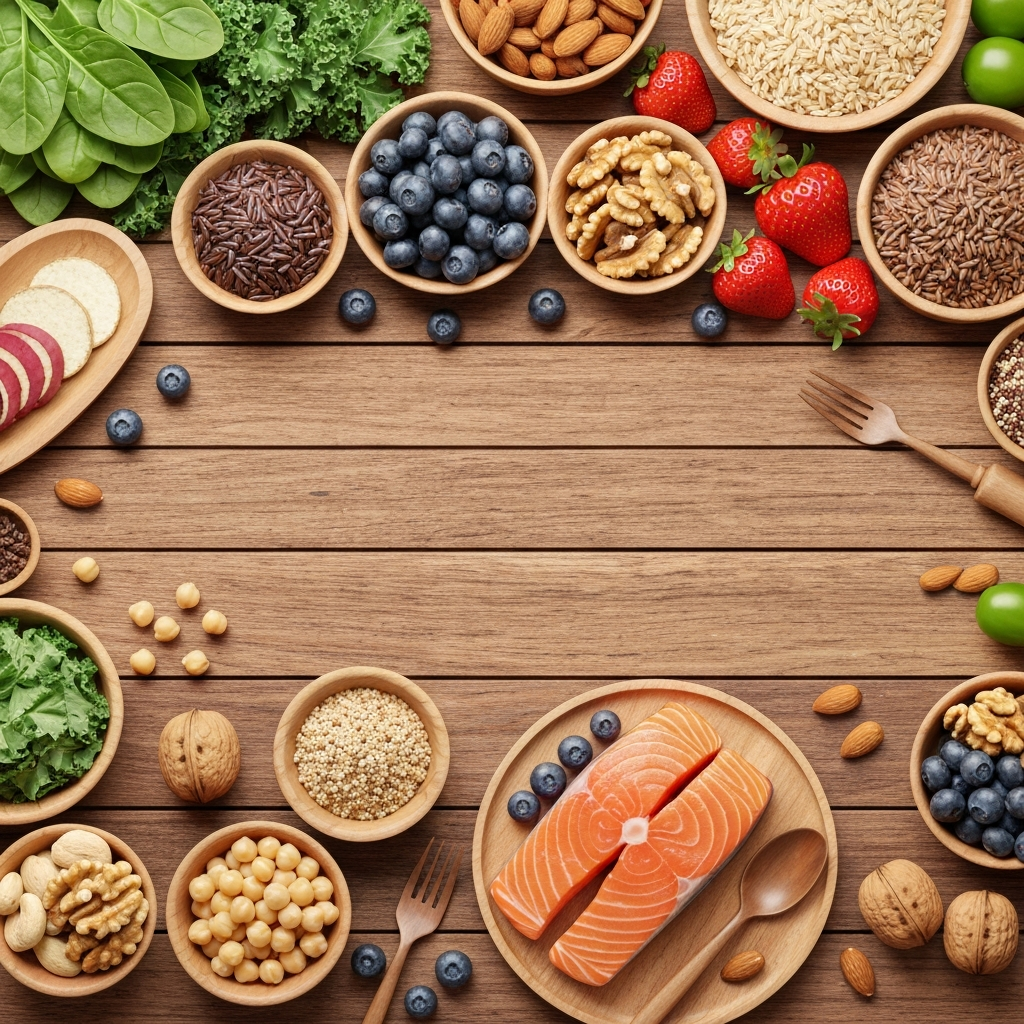
Healthy Food

variety of healthy foods tabletop

Key Highlights

  • Eating healthy is important for good health and feeling your best.
  • A balanced diet means eating different foods in the right amounts.
  • Make sure to eat lots of fruits and a variety of vegetables every day.
  • Build your meals around whole grains and pick lean proteins for good health benefits.
  • Drink plenty of water and try to avoid foods high in sugar, salt, and saturated fat.
  • Learning to read food labels helps you make better choices when you shop.

Introduction

Do you want to feel better by changing what you eat? Choosing good foods is one of the best ways to stay healthy. Following easy dietary guidelines can help you have more energy and keep a healthy weight. This guide will show you the basics of healthy eating. You will learn how to pick the right foods and create a balanced meal plan. Let’s see how you can add healthy and tasty foods to your daily life.

Essential Healthy Food Choices for a Balanced Diet

Creating a balanced diet means eating a mix of different foods. Think of it like painting with many colors. Each food group has special nutrients and health benefits your body needs to stay healthy. The best way to eat well is to include foods from all the main food groups every day.

When you choose different kinds of foods, you get many vitamins, minerals, and other important nutrients. In the next sections, we will talk about the best foods you should add to your diet for healthy eating and a balanced diet.

1. Leafy Greens and Cruciferous Vegetables

Dark green vegetables are very good for your health. You should try to eat them three or four times a week. Vegetables like spinach, kale, and broccoli are great to have in your kitchen. They have many vitamins, minerals, and fiber. These help make your diet healthy.

The dietary guidelines say you should eat at least five portions of different vegetables and fruits every day. Eating some leafy greens is an easy way to reach this goal. For example, three big spoonfuls of cooked vegetables count as one portion.

These vegetables also have antioxidants. Antioxidants help protect your body. You can add spinach to your dinner or put some kale in a smoothie. This small change can bring good health benefits.

2. Fresh Fruits and Berries

Eating fresh fruits and berries is a tasty way to improve your health. Berries like blueberries, strawberries, and raspberries are very good for you because they have a lot of antioxidants and vitamins. Try to eat two to four servings of fruit every day to get the health benefits.

Picking fresh foods instead of processed ones gives you more nutrients without extra sugar or preservatives. A single serving of fruit is easier to eat than you might think. For example, one serving can be:

  • One medium fruit like an apple or banana
  • A 150ml glass of fruit juice (only one per day because of the sugar)
  • 30g of dried fruit, best eaten with meals

There is a wide variety of fruit to choose from, so you can find ones you like. Changing a sugary snack to fresh fruit is an easy way to help your health and get a natural energy boost.

3. Lean Proteins (Chicken, Fish, Eggs, Tofu)

Protein is important for your body to grow and fix itself. Choosing lean proteins is a good choice for your health. Foods like skinless poultry, fish, eggs, beans, and tofu are great sources. When you eat meat, pick lean cuts to lower your fat intake.

Oily fish like salmon, sardines, and tuna are very helpful. They have omega-3 fatty acids, which help keep your heart healthy. These fatty acids may also lower the risk of heart disease. The NHS says you should eat at least two portions of fish each week, with one being an oily fish. [Source: https://www.nhs.uk/live-well/eat-well/how-to-eat-a-balanced-diet/]

Eggs are another healthy and flexible protein source. For those who prefer plants, soy products like tofu and edamame work well. Eating different lean proteins like these makes sure you get the nutrients you need for a strong and healthy body.

4. Whole Grains (Brown Rice, Oats, Quinoa)

Starchy foods should be more than a third of what you eat, and the best way to eat them is by choosing whole grains. Whole grains have more fiber, vitamins, and minerals than refined grains like white bread or white rice.

Switching to whole grains is easy. You can pick brown rice instead of white rice. You can also choose wholewheat pasta and bread. These foods are a good source of fiber. Fiber helps your digestion and makes you feel full for longer. Some good whole grain options are:

  • Oats
  • Quinoa
  • Brown rice
  • Barley

Potatoes with their skins on are also a great source of fiber and vitamins. When your meals focus on these starchy foods with fiber, you give your body steady energy and help your digestion work well.

5. Nuts, Seeds, and Healthy Fats

While it’s important to limit your intake of saturated fat, some fat is essential for your health. The key is to choose unsaturated fats, which can help lower cholesterol levels. Nuts, seeds, and certain oils are excellent sources of these healthy fats.

Adding a moderate amount of nuts and seeds to your diet is a great way to get beneficial nutrients. For example, just one to two tablespoons of ground flaxseed or a quarter cup of nuts a day can make a difference. These foods are high in energy, so remember that moderation is key.

Unsalted nuts make a good snack, and seeds like sunflower seeds can be easily sprinkled on salads or yogurt. Here are some examples of healthy fats to include in your diet:

Food Source

Type of Healthy Fat

Oily Fish

Omega-3 fatty acids

Nuts & Seeds

Unsaturated fats

Avocados

Unsaturated fats

Olive Oil

Unsaturated fats

How to Identify Truly Healthy Foods at the Store

Going to the grocery store can be tricky because many products say they are healthy. How do you know which ones are really good for you? The key to making healthier choices is to look beyond the front of the package and read the information on the back.

Knowing how to read nutrition labels and ingredient lists is very helpful. It shows you what is really in your food, like calories, fat, and hidden sugars. Let’s see how you can shop smart and pick foods that are truly good for you.

Reading Nutrition Labels and Ingredients Lists

The nutrition label is a great tool to help you make smart food choices. It shows what is in a product, so you can compare and pick the best one for your dietary patterns. Don’t worry if the numbers seem like a lot. Just focus on some key points.

First, check the serving size. All other numbers on the label are based on this amount. Next, look for certain things to help you decide. UCSF Health says a good source of fiber has 3 to 4 grams of fiber per serving. [Source: https://www.ucsfhealth.org/education/top-ten-foods-for-health]

Here are some things to check on the nutrition label:

  • Calories: Helps with weight management.
  • Saturated Fat: Try to choose foods with less saturated fat to keep your heart healthy.
  • Grams of Fiber: Pick foods that have more fiber.

By checking these details quickly, you can tell which foods are good for your health goals and which are not.

Spotting Hidden Sugars, Fats, and Additives

Many processed foods have large amounts of hidden sugars and unhealthy fats, even when they claim to be healthy. You can find these secrets in the ingredients list. The list shows ingredients from the most to the least in the product. If sugar or saturated fat is one of the first ingredients, the product likely has a lot of them.

Know that sugar has many names, like corn syrup, dextrose, and sucrose. Companies use these names to hide the total sugar in the food. Also, some oils can contain a lot of saturated fat.

Eating foods with hidden sugars and additives often can hurt your blood sugar and health. Taking a little time to check the ingredients list can help you avoid these and choose foods that are really better for you.

Building a Balanced Daily Meal Plan with Healthy Foods

Now that you know what foods to pick, how do you bring them all together for a daily meal plan? Following dietary guidelines for a balanced diet does not have to be hard. The aim is to make dietary patterns that have a mix of vegetables, proteins, and whole grains in every meal.

A good meal plan makes sure you get the energy and nutrients you need all day. Here are some easy examples and recipe ideas to help you create tasty and healthy meals without stress.

Breakfast, Lunch, Dinner, and Snack Examples

Making a healthy meal plan is simple with a few easy ideas. For breakfast, start your day with food that gives you energy for a long time. A bowl of oatmeal with a spoon of raisins is a great pick. This mix includes whole grains and fruit.

For lunch, at home or packed in a lunchbox, try a salad with lean chicken and lots of veggies. It is light but filling. For dinner, choose oily fish like salmon. Add some brown rice and steamed broccoli on the side. These meals offer a good balance of nutrients.

Remember snacks are important! A good snack helps stop hunger and gives energy between meals. Here are some simple snack ideas for your day:

  • Breakfast: Whole grain cereal with low-fat dairy milk.
  • Lunch: A sandwich on wholemeal bread with a side salad.
  • Snack: A banana or a small handful of unsalted nuts.

Easy Recipe Ideas for Busy Schedules

Eating healthy does not have to take a lot of time, even if your day is very busy. There are many simple recipes you can make fast. Soups and stews work well because you can cook a big pot and eat it for a few days. Lentil and vegetable soup is filling and good for you.

Stir-fries are a quick and healthy choice too. You can use tofu or another soy protein. Add your favorite fresh veggies and eat it with brown rice for a full meal. Keeping cooked proteins or canned fish ready can also save time when you are busy.

Here are some more quick and easy recipe ideas:

  • A fast pasta dish with wholewheat pasta, canned tomatoes, and beans.
  • Scrambled eggs with spinach and one slice of wholemeal toast.
  • A bowl of low-fat yogurt with fresh berries and seeds on top.

Conclusion

To sum up, choosing healthy foods is very important for a balanced diet and your overall health. When you add leafy greens, fresh fruits, lean proteins, whole grains, and good fats to your meals, you give your body the nutrients it needs. At the same time, you get to enjoy tasty food. Learning to read nutrition labels and check ingredient lists helps you pick the healthiest options when shopping. A bit of planning can help you create a balanced daily meal plan that matches your lifestyle. By following these healthy habits, you will feel better and have a good connection with food. If you want to eat healthier, you can book a free consultation with our nutrition experts for advice that fits you.

Frequently Asked Questions

What’s the difference between healthy and unhealthy foods?

Healthy foods have many nutrients such as vitamins, minerals, and fiber. Unhealthy foods usually have many calories but not many nutrients. They contain large amounts of sugar, salt, or saturated fat. Eating a lot of unhealthy foods can increase the risk of obesity and other health problems.

Are there official guidelines for creating healthy meals?

Yes, there are official dietary guidelines, such as the NHS Eatwell Guide. It shows how to get a balanced diet by telling you the right amounts of different food groups to eat. This means you should base your meals on starchy foods, eat a variety of vegetables, and enjoy the health benefits that come from good nutrition.

Mastering the Art of Prison Break

Dramatic prison break scene

Key Highlights

  1. Psychological Skills: Learn the mental tricks and ways to influence others that help in successful prison breaks. These skills are often more important than just physical strength.

Famous Escapes: Study the legendary What are some of the most memorable moments in «Prison Break» related to prison breaks?

«Prison Break» is a TV show full of powerful and unforgettable moments about breaking out of prison. Some of the best and most well-known scenes are:

The main story of the first season is about a detailed plan to help Lincoln Burrows escape from Fox River State Penitentiary.

2. Michael Scofield’s intricate tattoo that holds the blueprint of the prison, allowing him to plan their escape in detail.

  1. The tense moments during the escape, with the use of different tools and plans to get past obstacles.
  1. The surprise betrayals and new alliances made inside the prison affect how well the escape plan works.
  1. The exciting car chases and near misses happen as the characters try to escape, racing against time and their enemies to avoid being caught.

These scenes show the core of the series and keep viewers very interested. The characters face risky situations as they try to escape from prison. This makes the story exciting and keeps people watching.

  1. Escapes from the past show smart ways people used to get away. They also show why good planning is very important.
  2. Knowing the design is key. Like Michael Scofield, who is a structural engineer in Fox River, it is very important to understand how the building is made. This helps find weak spots in a prison.
  3. Working together and trust matter a lot. Many escapes need a group of people both inside and outside the prison to work as a team.
  4. The desire for freedom is strong. People often risk everything because they feel hope, desperation, or want justice. This drive pushes them to try to escape.

Introduction

Prison walls at sunset

«Prison Break» is a thrilling show with Wentworth Miller playing Michael Scofield. The story takes place in Fox River State Penitentiary. Michael has a smart plan to help his brother, Lincoln, who did not do the crime he was blamed for. The show keeps viewers interested with clever plans and tense escapes. It makes you think about what freedom really means in a way that feels true.

Thrilling prison escape art

Mastering the Art of Prison Break: Key Strategies

Team planning a prison escape

Escaping from prison is often shown as thrilling in movies and TV shows. But in real life, it is very risky and full of challenges. To escape, a person needs to be smart, strong, and lucky. Knowing what it feels like to be in prison is very important. It takes careful planning and the skill to handle surprises.

Using weak spots in security is important. Making friends with other inmates can also be helpful. As shown in «Prison Break,» escaping usually needs both clever thinking and physical effort. The process involves outsmarting the system and dealing with the people in a place that is tightly controlled.

1. Understanding the Psychological Aspects

Successful prison breaks are not only about blueprints and tunnels. They also need smart use of psychology. Michael Scofield is a clear example of this. He was first a structural engineer and then became a prisoner. His calm way and careful plans helped him gain trust from other prisoners and some guards. This proves that understanding how people act is as important as knowing building plans.

Prison breaks happen when people find weak spots in a system designed to control how they act. If you understand how people think, you can use things like daily habits, carelessness, and the need for friends among prisoners to your advantage.

Using these factors can help improve the chances of escape. Building trust with other inmates, spotting weaknesses in the guards, or just fitting in by observing how prison life works all show how important psychology is for gaining freedom.

2. Analyzing Escape Plans from Historical Contexts

The search for freedom has caused many daring escape attempts throughout history. When we look at these escape plans, like how Lincoln Burrows studied his own case, we find valuable lessons about breaking out of prison. From smart tunnels to clever disguises, these true stories prove that strong will can make what seems impossible become real.

In 1962, a well-known prison break took place at Alcatraz Federal Penitentiary. Three prisoners named Frank Morris, John Anglin, and Clarence Anglin dug their way out. They used spoons and a drill they made by hand. Their escape is still a mystery today. It shows how important it is to be creative and plan carefully.

These true stories show how smart people can be when they feel desperate. They also teach us useful lessons for anyone who wants to try brave actions like these. By studying both the wins and errors from the past, we can learn important tips about finding weak spots in security, making distractions, and beating the system.

Conclusion

To get good at Prison Break, you need to know about psychology and past escape plans. By studying these plans, you can learn more and apply them in different cases. Remember, escaping from prison takes creative ideas and careful planning. Look at some well-known prison breaks in history to understand the tricks they used. Study escape plans from different situations to expand what you know. Watching prison break movies and shows can also teach you useful methods and how to plan well. By practicing Prison Break, you can improve your thinking skills and learn better ways to plan.

Frequently Asked Questions

1. What are the most famous prison breaks in history?

Many of the most famous prison escapes have happened in history. Movies and TV shows by Twentieth Century Fox, and stories made by people like Paul Scheuring, tell these events. Some well-known escapes are from Alcatraz, Maze Prison in Northern Ireland, and Dannemora prison in the United States. Each escape needed good planning, lots of courage, and some luck.

2. What psychological tactics are used in prison breaks?

Characters like Robert Knepper’s T-Bag often use tricks and fear to get what they want. This shows the common mind games used during prison escapes. On the other hand, characters who want to prove they are innocent, like Lincoln Burrows, or those who want to protect the people they love, like Sarah Wayne Callies’ character, focus on building trust and making friends. These mind games can be just as important as physical plans for escape. This is true, especially when dealing with a death sentence.

3. How can escape plans be effectively executed?

Good escape plans need careful thought, smart ideas, and the skill to change when needed. Characters like Michael Scofield, who is a structural engineer in «Prison Break,» teach us this. In the first and fifth seasons of the show, success depends on seeing problems before they happen, using weaknesses in the system, and quickly changing the plan if things go wrong.

4. What lessons can be learned from prison break films and shows?

Prison break movies and TV shows, even if they are not real, teach us important lessons. They show us how strong people can be, the power of hope, and what happens when people feel very desperate. These stories tell us that the wish to be free is very strong. This strong wish can make people do great things, sometimes even breaking the rules. The stories of characters like those played by Jodi Lyn O’Keefe show us that the human spirit can keep going, even in hard times.

The 12 Best Breakfast Foods to Eat in the Morning

  1. Health Conditions

Health Conditions

  1. All
  2. Breast Cancer
  3. Cancer Care
  4. Caregiving for Alzheimer’s Disease
  5. Chronic Kidney Disease
  6. Chronic Obstructive Pulmonary Disease (COPD)
  7. Digestive Health
  8. Eye Health
  9. Heart Health
  10. Menopause
  11. Mental Health
  12. Migraine
  13. Multiple Sclerosis (MS)
  14. Parkinson’s Disease
  15. Psoriasis
  16. Rheumatoid Arthritis (RA)
  17. Sleep Health
  18. Type 2 Diabetes
  19. Weight Management

Condition Spotlight

  1. All
  2. Controlling Ulcerative Colitis
  3. Navigating Life with Bipolar Disorder
  4. Mastering Geographic Atrophy
  5. Managing Type 2 Diabetes
  6. Wellness

Wellness Topics

  1. All
  2. CBD
  3. Fitness
  4. Healthy Aging
  5. Hearing
  6. Mental Well-Being
  7. Nutrition
  8. Parenthood
  9. Recipes
  10. Sexual Health
  11. Skin Care
  12. Sleep Health
  13. Vitamins and Supplements
  14. Women’s Wellness

Product Reviews

  1. All
  2. At-Home Testing
  3. Men’s Health
  4. Mental Health
  5. Nutrition
  6. Sleep
  7. Vitamins and Supplements
  8. Women’s Health

Featured Programs

  1. All
  2. Your Guide to Glucose Health
  3. Inflammation and Aging
  4. Cold & Flu Season Survival Guide
  5. She’s Good for Real
  6. Tools

Featured

  1. Video Series
  2. Pill Identifier
  3. FindCare
  4. Drugs A-Z

Lessons

  1. All
  2. Crohn’s and Ulcerative Colitis Essentials
  3. Diabetes Nutrition
  4. High Cholesterol
  5. Taming Inflammation in Psoriasis
  6. Taming Inflammation in Psoriatic Arthritis

Newsletters

  1. All
  2. Anxiety and Depression
  3. Digestive Health
  4. Heart Health
  5. Migraine
  6. Nutrition Edition
  7. Type 2 Diabetes
  8. Wellness Wire

Lifestyle Quizzes

  1. Find a Diet
  2. Find Healthy Snacks
  3. Weight Management
  4. Featured

Health News

  1. All
  2. Can 6-6-6 Walking Workout Help You Lose Weight?
  3. This Couple Lost 118 Pounds Together Without Medication
  4. 5 Science-Backed Ways to Live a Longer Life
  5. Morning Coffee May Help You Live Longer
  6. ‘Weekend Warrior’ Workouts for Your 2025 Fitness Goals

This Just In

  1. 5 Tips for a Healthy Lifestyle
  2. How to Disinfect Your House After the Flu
  3. Best Vegan and Plant-Based Meal Delivery for 2025
  4. Does Medicare Cover Pneumonia Shots?
  5. Chromosomes, Genetics, and Your Health

Top Reads

  1. Best Multivitamins for Women
  2. Best Multivitamins for Men
  3. Best Online Therapy Services
  4. Online Therapy That Takes Insurance
  5. Buy Ozempic Online
  6. Mounjaro Overview

Video Series

  1. Youth in Focus
  2. Through an Artist’s Eye
  3. Future of Health
  4. Connect

Find Your Bezzy Community

  1. Bezzy communities provide meaningful connections with others living with chronic conditions. Join Bezzy on the web or mobile app.
  2. All
  3. Breast Cancer
  4. Multiple Sclerosis
  5. Depression
  6. Migraine
  7. Type 2 Diabetes
  8. Psoriasis

Follow us on social media

  1. Can’t get enough? Connect with us for all things health.
  2. Breast Cancer
  3. Cancer Care
  4. Caregiving for Alzheimer’s Disease
  5. Chronic Kidney Disease
  6. Chronic Obstructive Pulmonary Disease (COPD)
  7. Digestive Health
  8. Eye Health
  9. Heart Health
  10. Menopause
  11. Mental Health
  12. Migraine
  13. Multiple Sclerosis (MS)
  14. Parkinson’s Disease
  15. Psoriasis
  16. Rheumatoid Arthritis (RA)
  17. Sleep Health
  18. Type 2 Diabetes
  19. Weight Management
  20. Controlling Ulcerative Colitis
  21. Navigating Life with Bipolar Disorder
  22. Mastering Geographic Atrophy
  23. Managing Type 2 Diabetes
  24. CBD
  25. Fitness
  26. Healthy Aging
  27. Hearing
  28. Mental Well-Being
  29. Nutrition
  30. Parenthood
  31. Recipes
  32. Sexual Health
  33. Skin Care
  34. Sleep Health
  35. Vitamins and Supplements
  36. Women’s Wellness
  37. At-Home Testing
  38. Men’s Health
  39. Mental Health
  40. Nutrition
  41. Sleep
  42. Vitamins and Supplements
  43. Women’s Health
  44. Your Guide to Glucose Health
  45. Inflammation and Aging
  46. Cold & Flu Season Survival Guide
  47. She’s Good for Real
  48. Video Series
  49. Pill Identifier
  50. FindCare
  51. Drugs A-Z
  52. Crohn’s and Ulcerative Colitis Essentials
  53. Diabetes Nutrition
  54. High Cholesterol
  55. Taming Inflammation in Psoriasis
  56. Taming Inflammation in Psoriatic Arthritis
  57. Anxiety and Depression
  58. Digestive Health
  59. Heart Health
  60. Migraine
  61. Nutrition Edition
  62. Type 2 Diabetes
  63. Wellness Wire
  64. Find a Diet
  65. Find Healthy Snacks
  66. Weight Management
  67. Can 6-6-6 Walking Workout Help You Lose Weight?
  68. This Couple Lost 118 Pounds Together Without Medication
  69. 5 Science-Backed Ways to Live a Longer Life
  70. Morning Coffee May Help You Live Longer
  71. ‘Weekend Warrior’ Workouts for Your 2025 Fitness Goals
  72. 5 Tips for a Healthy Lifestyle
  73. How to Disinfect Your House After the Flu
  74. Best Vegan and Plant-Based Meal Delivery for 2025
  75. Does Medicare Cover Pneumonia Shots?
  76. Chromosomes, Genetics, and Your Health
  77. Best Multivitamins for Women
  78. Best Multivitamins for Men
  79. Best Online Therapy Services
  80. Online Therapy That Takes Insurance
  81. Buy Ozempic Online
  82. Mounjaro Overview
  83. Youth in Focus
  84. Through an Artist’s Eye
  85. Future of Health
  86. Breast Cancer
  87. Multiple Sclerosis
  88. Depression
  89. Migraine
  90. Type 2 Diabetes
  91. Psoriasis

Subscribe

Nutrition

Evidence Based

Medically reviewed by Imashi Fernando, MS, RDN, CDCESWritten by Franziska Spritzler and Katey Davidson, MScFN, RD, CPT

A balanced breakfast typically includes protein, fiber, and a range of nutrients. If you’re looking for a healthy morning meal, try easy options like eggs, whole wheat toast with toppings, nuts, and green tea.

A nutritious breakfast can provide long-lasting energy and keep you full for hours. A good breakfast is typically high in fiber, protein, healthy fats, and micronutrients.

Some commercial breakfast foods can be high in sugar, refined carbs, and additives. Instead, why not try some nutrient-dense whole-food options?

Here are 12 of the best foods and drinks to enjoy in the morning.

1. Eggs

scrambling eggs in cast-iron pan

Share on Pinterest

Eggs provide protein, which is essential for muscle growth and maintenance. It can also keep you feeling full.

In a 2020 study, people who had eggs and toast for breakfast reported significantly less hunger than those who had bran cereal with milk and orange juice, suggesting a higher protein intake (25 grams versus 11 grams) may promote greater fullness.

The egg group also ate fewer calories at lunch, suggesting that eggs support satiety, or the feeling of being full.

Eggs also contain:

  1. lutein and zeaxanthin in the yolk, antioxidants that appear to support eye health and may have benefits for skin, liver, eye, and cardiovascular health
  2. choline, a vital nutrient for brain and liver health
  3. B vitamins, including folate
  4. vitamin A
  5. iron, calcium, and other essential minerals

Research from 2021 indicates that, in contrast with previous beliefs, there is no direct evidence that eggs raise cholesterol levels in most people, despite their high cholesterol content. Some evidence suggests they may have a mild protective effect against heart disease.

Eat eggs with other nutritious foods, such as whole grain toast, whole fruit, or sautéed vegetables.

2. Greek yogurt

Greek yogurt is made by straining whey and other liquid from milk curds, producing a creamy product higher in protein than regular yogurt.

It’s also lower in calories than many other protein sources. A 5.3-ounce container (150-gram) serving provides 15 grams of protein but only 92 calories.

Other nutrients in Greek yogurt include:

  1. calcium
  2. vitamin B12
  3. zinc
  4. potassium
  5. phosphorus

Certain types contain probiotics like Bifidobacteria, which support digestion. To ensure your yogurt contains probiotics, look for the phrase “contains live and active cultures” on the label.

If you prefer an even creamier, higher-protein yogurt, you can try the Icelandic variety, skyr.

Eating protein-rich plain Greek yogurt with berries and other fruits may add to its prebiotic and probiotic properties. Topping with dried fruit, oatmeal, or nuts can add texture, fiber, and other nutrients.

3. Coffee

Coffee contains caffeine, which promotes alertness and increases physical and mental performance.

It may also contain a range of polyphenols, compounds with antioxidant and anti-inflammatory properties.

Research suggests it’s safe for most adults to drink up to 4 cups (946 ml) of coffee daily or up to 400 mg of caffeine.

During pregnancy, people should consume no more than 200 mg of caffeine daily, as caffeine may increase the risk of complications.

Drink your coffee black or with dairy or plant-based milk. Try to avoid sugar and flavored syrups or use them sparingly, as too much sugar increases health risks.

4. Oatmeal

Oatmeal comes from rolled or steel-cut oats. It contains a soluble fiber called beta-glucan, which can help lower cholesterol and glucose levels and has antioxidant and prebiotic properties.

Because of how the body processes oats, they also leave you feeling full for longer, reducing the temptation to snack mid-morning.

Oats also provide:

  1. iron
  2. B vitamins
  3. manganese
  4. magnesium
  5. zinc
  6. selenium

In addition, they contain around 10 grams (g) of protein per cup (81 g) of dry oats. To boost the protein content, make oatmeal with milk instead of water, mix in some protein powder, or serve it with a side of eggs.

You can mix raw oats with dried fruit, nuts, seeds, coconut, and other ingredients for a homemade muesli.

Oats are suitable for people who cannot eat gluten due to celiac disease or gluten sensitivity. However, due to the risk of cross-contamination, you should choose oats that have been certified gluten-free.

5. Chia seeds

Chia seeds are a good source of fiber.

One ounce (28 grams) of dried chia seeds provides nearly 10 g of fiber.

This fiber is also soluble, which means it absorbs water and increases the volume of food moving through your digestive tract, making you feel full longer.

The nutrients in chia seeds may have other benefits, including helping:

  1. managing glucose levels
  2. lowering cholesterol
  3. preventing inflammation

Chia seeds aren’t high in protein, but combining them with Greek yogurt, cottage cheese, or a protein shake can increase your protein intake, as in the recipe below.

High protein chia pudding recipe

Share on Pinterest

Ingredients

  1. 1 ounce (28 grams) of dry chia seeds
  2. 1 scoop (25 grams) of whey protein powder
  3. 1 cup (240 mL) of preferred milk
  4. 1/2 cup (74 grams) of berries
  5. stevia or another natural sweetener to taste, if desired

Directions

  1. Combine all ingredients in a bowl and mix well.
  2. Cover the bowl and refrigerate for at least 1 hour.

6. Berries

Berries provide a low calorie sweet treat that tends to be high in fiber and antioxidants. Popular options include:

  1. blueberries
  2. raspberries
  3. strawberries
  4. blackberries

Berries also offer antioxidants called anthocyanins, which provide their characteristic blue, purple, and red colors. A diet high in anthocyanins may help protect against:

  1. inflammation
  2. heart disease
  3. cancer
  4. type 2 diabetes
  5. other chronic conditions

For a tasty breakfast, you can add berries to Greek yogurt, cottage cheese, oatmeal, chia pudding, or a fruit smoothie.

7. Cottage cheese

Low fat cottage cheese is a high protein breakfast item, providing 24 g of protein per cup (220 g). For this reason, it is also filling. One 2015 study found cottage cheese to be as satisfying as eggs.

Cottage cheese is low in calories, providing only 180 calories per cup (220 g). This means it may also support weight loss, if that’s your goal.

You can eat cottage cheese with many other nutritious foods, such as:

  1. berries
  2. peaches
  3. tomatoes
  4. cucumbers
  5. chia seeds
  6. ground flaxseed
  7. granola

8. Whole grain toast

Share on Pinterest

Whole grain toast is high in fiber and complex carbs. These digest slowly, help you feel full for longer, and are less likely to raise blood sugar levels than breads or pastries made with white flour.

You can pair whole wheat toast with many foods, including:

  1. mashed egg and tomato
  2. avocado and chili flakes
  3. unsweetened, whole peanut butter and banana
  4. cottage cheese and strawberries
  5. sliced figs and honey
  6. tuna
  7. sliced turkey or chicken
  8. baked beans

For extra fiber and protein, try sprouted grain bread, two slices of which provide around 8 grams of fiber and 10 grams of protein.

9. Nuts

Nuts of all types provide:

  1. magnesium
  2. potassium
  3. heart-healthy monounsaturated fat
  4. antioxidants

Their protein, fat, and fiber content also means they can promote fullness.

A 2022 review concluded that, unless you have a nut allergy, eating a handful of nuts and seeds daily may help reduce the risk of cardiovascular disease and other health conditions.

As nuts tend to be high in calories, eating too many could lead to excess weight gain. You may also get the most health benefits from plain nuts without added salt, sugar, or oil.

Topping Greek yogurt, cottage cheese, or oatmeal with a spoonful or two of chopped nuts is a great way to increase your breakfast’s nutritional value.

10. Green tea

Green tea is a soothing drink that gets you going in the morning. It contains caffeine, but only about half the amount in coffee.

It also contains L-theanine, which promotes a calming effect and may reduce the “jitters” linked to caffeine intake. It may also improve mood and reduce anxiety.

Green tea also provides epigallocatechin gallate (EGCG), an antioxidant that may help protect against neurological disorders, such as dementia, and cell death.

11. Protein shakes or smoothies

Smoothies are another great breakfast option. Blend water, dairy milk, or non-dairy milk with nuts, bananas, frozen berries, or other fruits or vegetables for a tasty start to the day.

Adding protein powder can increase the protein content. This smoothie-protein shake combination can promote fullness and reduce hunger while providing a tasty and nutritionally balanced breakfast.

If you work out early in the morning, this may be a better option after exercise than a heavy breakfast.

12. Fruit

Share on Pinterest

Fruits are a light breakfast option, and some whole fruits can make an easy snack during your commute.

All fruits are relatively low in calories and contain fiber, vitamins, minerals, and simple sugars. The fiber in fruit helps slow your body’s absorption of its sugars, giving you a steady energy source. The minerals they contain in large amounts can vary by fruit.

Potassium-rich fruits include:

  1. bananas
  2. oranges
  3. cantaloupe
  4. papaya
  5. mango

Many fruits contain vitamin C, which acts as an antioxidant and is crucial to skin health. Fruits high in vitamin C can include:

  1. oranges
  2. guava
  3. kiwi
  4. strawberries
  5. papaya
  6. acerola cherries
  7. lychee

Fruits also provide an array of polyphenol compounds and antioxidants, depending on their color. For instance, guava is high in lycopene, while purple plums contain anthocyanins. Eating a range of fruits of various colors can help boost your intake of a range of antioxidants.

Consuming fruits and vegetables may reduce the risk of health conditions such as:

  1. cardiovascular disease
  2. dementia
  3. diabetes
  4. obesity

Whole fruit is higher in fiber than fruit juice, and some commercial fruit juices have added sugar. For this reason, it’s best to eat whole fruit when possible.

For a balanced breakfast, pair fruit with high protein foods, such as eggs, Greek yogurt, or cottage cheese.

Frequently asked questions

What are healthy foods to eat for breakfast?

Good choices for breakfast foods include nutrient-dense ones that fill you up so you don’t feel hungry again for a while. Try whole fruits, eggs, whole grain toast, nuts, and smoothies for a tasty and satisfying start to the day.

What is the best breakfast for losing belly fat?

Eating foods high in protein, fiber, or both can leave you feeling full longer, making you less likely to snack on less nutritious snacks during the morning.

High protein options include low fat cottage cheese, plain Greek yogurt, and eggs. Pair these with nutritious, high fiber foods such as whole grain bread, oats, and fruit.

To drink, opt for water, green tea, or coffee without added sugar or cream.

What are 5 healthy breakfast combinations?

Five healthy breakfast combinations include:

  1. An omelet with sauteed vegetables, such as red peppers, broccoli, or mushrooms
  2. Greek yogurt with berries, nuts, and seeds
  3. Steel-cut oatmeal with cut apple, cinnamon, and protein powder
  4. Whole grain toast with avocado and sesame seeds or with peanut butter and banana
  5. A smoothie made from banana, protein powder, berries, spinach, and chia seeds

Which foods should I avoid for breakfast?

You may want to limit foods high in calories but low in nutrients and fiber. These include cereals, pastries, and white toast. These are typically made from refined flour and have added sugar. They are high in calories and unlikely to leave you feeling satisfied.

Other highly processed foods, such as sausages and bacon, are high in fat and sodium, can be hard to digest, and the risk of heart disease.

Commercially prepared juices often have added sugar. Instead, make your own or eat whole fruit.

The bottom line

A nutritious breakfast can give you a good start to the day and may help prevent snacking.

The best choices to fill you up and boost your overall health are high in fiber, protein, healthy fats, vitamins, and minerals.

Many nutritious foods and drinks are easy to prepare in the morning. These include whole grain toast, eggs, green tea, coffee, and protein shakes. If you don’t have time for breakfast, you can eat some options, such as fruit or overnight oats, on the go.

Just one thing

Try this today: For the next week, plan your breakfasts ahead of time based on your schedule and preferences. Make sure each breakfast contains at least one food high in protein, another high in fiber, and at least one fruit or veggie.

How we reviewed this article:

SourcesHistoryeditorial policy

  1. Balakrishna R, et al. (2022). Consumption of nuts and seeds and health outcomes including cardiovascular disease, diabetes and metabolic disease, cancer, and mortality: An umbrella review.
  2. https://www.ncbi.nlm.nih.gov/pmc/articles/PMC9776667/
  3. Cicero AFG, et al. (2020). A randomized placebo-controlled clinical trial to evaluate the medium-term effects of oat fibers on human health: The beta-glucan effects on lipid profile, glycemia and intestinal health (BELT) study.
  4. https://www.ncbi.nlm.nih.gov/pmc/articles/PMC7146517/
  5. Ciercierska A, et al. (2019). Nutraceutical functions of beta-glucans in human nutrition.
  6. https://pubmed.ncbi.nlm.nih.gov/31960663/
  7. Choline: Fact sheet for health professionals. (2022).
  8. https://ods.od.nih.gov/factsheets/Choline-HealthProfessional/
  9. Evans J, et al. (2024). Caffeine.
  10. https://www.ncbi.nlm.nih.gov/books/NBK519490/
  11. Fernandez MA, et al. (2017). Potential health benefits of combining yogurt and fruits based on their probiotic and prebiotic properties.
  12. https://www.ncbi.nlm.nih.gov/pmc/articles/PMC5227968/
  13. Food Data Central. (n.d.).
  14. https://fdc.nal.usda.gov/index.html
  15. Gonçalves B, et al. (2023). Composition of nuts and their potential health benefits—An overview.
  16. https://www.ncbi.nlm.nih.gov/pmc/articles/PMC10000569/
  17. Górecki M, et al. (2020). The antioxidant content of coffee and its in vitro activity as an effect of Its production method and roasting and brewing time.
  18. https://www.ncbi.nlm.nih.gov/pmc/articles/PMC7222172/
  19. Hadjimbei E, et al. (2022). Beneficial effects of yoghurts and probiotic fermented milks and their functional food potential.
  20. https://www.ncbi.nlm.nih.gov/pmc/articles/PMC9455928/
  21. Hrnčič MK, et al. (2020). Chia seeds (Salvia hispanica L.): An overview—phytochemical profile, isolation methods, and application.
  22. https://www.ncbi.nlm.nih.gov/pmc/articles/PMC6994964/
  23. Iqbal R, et al. (2021). Associations of unprocessed and processed meat intake with mortality and cardiovascular disease in 21 countries [Prospective Urban Rural Epidemiology (PURE) Study]: A prospective cohort study.
  24. https://pubmed.ncbi.nlm.nih.gov/33787869/
  25. Keogh JB, et al. (2020). Energy intake and satiety responses of eggs for breakfast in overweight and obese adults: A crossover study.
  26. https://www.ncbi.nlm.nih.gov/pmc/articles/PMC7432073/
  27. Krittanawong C, et al. (2020). Association between egg consumption and risk of cardiovascular outcomes: A systematic review and meta-analysis.
  28. https://pubmed.ncbi.nlm.nih.gov/32653422/
  29. Li MY, et al. (2022). L-theanine: A unique functional amino acid in tea (camellia sinensis l.) with multiple health benefits and food applications.
  30. https://www.ncbi.nlm.nih.gov/pmc/articles/PMC9014247/
  31. Marsset-Baglieri A, et al. (2015). The satiating effects of eggs or cottage cheese are similar in healthy subjects despite differences in postprandial kinetics.
  32. https://pubmed.ncbi.nlm.nih.gov/25772196/
  33. Martins MS, et al. (2023). Blackberries and mulberries: Berries with significant health-promoting properties.
  34. https://www.ncbi.nlm.nih.gov/pmc/articles/PMC10418693/
  35. Mattioli R, et al. (2020). Anthocyanins: A comprehensive review of their chemical properties and health effects on cardiovascular and neurodegenerative diseases.
  36. https://www.ncbi.nlm.nih.gov/pmc/articles/PMC7504512/
  37. Mellor DD, et al. (2020). The effects of green tea amino acid L-Theanine consumption on the ability to manage stress and anxiety levels: A systematic review.
  38. https://pubmed.ncbi.nlm.nih.gov/31758301/
  39. Minich DM, et al. (2019). A review of the science of colorful, plant-based food and practical strategies for “Eating the Rainbow”.
  40. https://www.ncbi.nlm.nih.gov/pmc/articles/PMC7770496/
  41. Moon J, et al. (2020). Clinical evidence and mechanisms of high-protein diet-induced weight loss.
  42. https://www.ncbi.nlm.nih.gov/pmc/articles/PMC7539343/
  43. Mrowicka M, et al. (2022). Lutein and zeaxanthin and their roles in age-related macular degeneration—neurodegenerative disease.
  44. https://www.ncbi.nlm.nih.gov/pmc/articles/PMC8874683/
  45. Murillo AG, et al. (2019). Zeaxanthin: Metabolism, properties, and antioxidant protection of eyes, heart, liver, and skin.
  46. https://www.ncbi.nlm.nih.gov/pmc/articles/PMC6770730/
  47. Payne A, et al. (2022). Epigallocatechin-3-gallate (EGCG): New therapeutic perspectives for neuroprotection, aging, and neuroinflammation for the modern age.
  48. https://www.ncbi.nlm.nih.gov/pmc/articles/PMC8945730
  49. del Río-Celestino M, et al. (2020). The health benefits of fruits and vegetables.
  50. https://www.ncbi.nlm.nih.gov/pmc/articles/PMC7143647/
  51. Shehzad A, et al. (2023). Impact of oats on appetite hormones and body weight management: A review.
  52. https://www.ncbi.nlm.nih.gov/pmc/articles/PMC9930024/
  53. Zurbau A, et al. (2020). Relation of different fruit and vegetable sources with incident cardiovascular outcomes: A systematic review and meta‐analysis of prospective cohort studies.
  54. https://www.ncbi.nlm.nih.gov/pmc/articles/PMC7792377/
  55. Zurbau A, et al. (2021). The effect of oat β-glucan on postprandial blood glucose and insulin responses: A systematic review and meta-analysis.
  56. https://www.ncbi.nlm.nih.gov/pmc/articles/PMC8563417/

Share this article

Read this next

  1. Breakfast Meal Prep for Everyday
  2. Medically reviewed by the Healthline Medical Network
  3. Learn a dietitian’s three easy-to-prep ahead breakfast recipes to get you through the week.
  4. READ MORE
  5. 12 of the Best High Protein Breakfast Recipes
  6. Medically reviewed by Kathy W. Warwick, RDN, CDCES
  7. Dig into these high protein breakfast options. The deliciously inventive recipes, from spinach feta wraps to chickpea scrambles, are sure to fuel your…
  8. READ MORE
  9. Breakfast Is the Most Important Meal. But Why?
  10. Researchers say making breakfast your biggest meal of the day is a good way to lose weight… if you don’t overdo it at lunch and dinner.
  11. READ MORE
  12. ‘Dry Yogurt’ Food Hack Goes Viral on TikTok. Is It Worth the Hype?
  13. Dry yogurt is the latest food trend that’s going viral on TikTok, but is worth the hype? Nutritionists reveal the pros and cons.
  14. READ MORE
  15. Ozempic: Best and Worst Thanksgiving Foods to Eat While Taking Weight Loss Drugs
  16. Eating some of your favorite Thanksgiving foods while taking drugs like Ozempic and Wegovy may trigger or worsen uncomfortable side effects. Health…
  17. READ MORE
  18. Breakfast Foods Affect Weight Loss, Metabolism Differently for Men vs Women
  19. What you eat for breakfast can affect your weight, metabolism, and energy levels differently if you’re a man or woman. Here’s why.
  20. READ MORE
  21. Replacing Some Ultra-Processed Foods in Your Diet May Significantly Lower Your Type 2 Diabetes Risk
  22. Replacing certain ultra-processed foods in your diet with healthier alternatives can significantly lower your risk of type 2 diabetes. Here’s how.
  23. READ MORE
  24. MIND Diet Linked with Sharper Memory, Lower Risk of Cognitive Decline
  25. The MIND diet (a blend of the Mediterranean and DASH diets) can help slow cognitive decline as you grow older, especially for women. Here’s why.
  26. READ MORE
  27. How the ‘Fridgescaping’ Trend Can Increase Your Risk of Food-Borne Illnesses
  28. ‘Fridgescaping,’ the art of elaborately decorating the inside of your refrigerator, may seem like a harmless new TikTok trend, but health experts say…
  29. READ MORE
  30. Why Cucumber Salad Is Going Viral on TikTok: 5 Simple Recipes to Try
  31. Cucumber salad recipes are going viral on TikTok, thanks in part to content creators like Logan Moffitt (a.k.a. “the Cucumber King”). Here are 5 of…
  32. READ MORE

The Different Types of Wood and Their Uses in Design and Construction

Wood types flatlay

Have you started a renovation project for your home, or are you simply interested in DIY projects?

Whatever category you happen to fall under, whether you’re a seasoned professional or a curious beginner, understanding the various types of wood and their applications in interior design and construction is essential.

From popular hardwoods like oak, maple and mahogany to beautiful softwoods like pine, cedar and spruce, wood is extremely versatile, that’s why it’s an excellent choice for any type of home design projects.

In this article we’ll take a closer look at the main characteristics of the many different types of wood, showing you some pros and cons for each wood type. We aim to provide helpful information for everyone, whether you’re a homeowner, contractor, or just starting out with a hobby project.

But before you start your next home renovation project, there are a couple of things to keep in mind.

Categories of Wood

First of all, you need to know that there are three categories of wood:

  1. Hardwoods
  2. Softwoods
  3. Engineered woods

The hardwoods and softwoods include the various types of wood in their natural state. Then, of course, you’ll find engineered woods, which often include a blend of various types of woods.

There are only a few hardwoods, which come from trees that do not produce cones or needles. Instead, these trees produce leaves and seeds. The most common hardwood species include cherry, maple, mahogany, oak, and walnut.

Meanwhile, the term softwoods doesn’t mean that the texture of these woods is actually soft. It refers to the ease with which they can be used for woodworking. These coniferous trees usually produce cones and have needles. Cedar, Fir, Pine, Redwood, and Spruce fall under this category.

Engineered wood refers to all manufactured wood products. They are also known as composite wood. The waste wood from sawmills is used to manufacture engineered wood. It is treated by using a heat or chemical process. You’ve surely heard of a few of them, such as composite board, medium density board, oriented strand board, and plywood.

Although many people may prefer the real wood for their homes, sometimes it makes sense to consider engineered woods. They are not only easier to access, but quite often more affordable than the woods in their true form. It really comes down to what you have in mind.

For example, if you want to use real walnut or mahogany for a project, it can be worth the investment. But if you have a few levels of flooring to cover, engineered wood might be more feasible.

That being said, you are the one who has to take all these factors into consideration. At the end of the day, you should go with your budget and taste preference before anything else. But for the purpose of this article, we decided to describe solely the two natural wood categories.

Having said all that, these are the different types of wood, as well as their uses in design and construction. Once you familiarize yourself with this list, it will make your decision making a lot easier.

Acacia

Typically found in Africa and Australia, acacia has more than a thousand species. It ranges in color from a light brown to a dark mahogany. Despite that, its heartwood is more reddish brown.

Prized for its gorgeous color, acacia is a durable wood that has irregular, wavy grain patterns that are unpredictable. Insect, rot and water resistant, acacia is great for flooring, as well as household items such as cutting boards and bowls.

But if you plan to use it outdoors, you should protect and seal it properly, and maintain it in order to keep it in good shape. One of the hardest woods to work with, it is a heavy wood that can crack or swell.

Pros:

  1. Durable: Resists wear and tear.
  2. Attractive: Rich color and grain.
  3. Water-Resistant: Good for moist areas.
  4. Sustainable: Eco-friendly options.

Cons:

  1. Costly: It’s more expensive than alternatives.
  2. High Maintenance: Requires regular care.
  3. Variable Appearance: Non-uniform look.
  4. Allergenic: May cause allergic reactions.

Ash

This hardwood lumber tree comes from many different types of trees such as black ash, blue ash, green ash, and white ash. With similar shades to maple trees, ash lumber is light in color.

It commonly has gold and white streaks, and its texture is similar to the oak’s, or rather rough.

Given its stiffness and strength, it is surprisingly a lightweight hardwood. Easy to paint and stain, it offers quite a decent shock resistance, compared to other hardwood species. You’ll find many pool cues and baseball bats constructed from ash wood.

Pros:

  1. Strong: Excellent strength-to-weight ratio.
  2. Flexible: It bends well for shaped pieces.
  3. Aesthetic: Light color with prominent grain.
  4. Affordable: Generally less expensive than other hardwoods.

Cons:

  1. Less Durable: Not as hard as some hardwoods.
  2. Susceptible to Pests: Can be attacked by insects like the emerald ash borer.
  3. Moisture Sensitive: Less water-resistant compared to other woods.
  4. Limited Availability: Environmental issues may affect supply.

Bamboo

Bamboo can be compared to maple or red oak because of its similar strength and hardness. Because it has a very dense texture, bamboo is tough on tools.

Hence, it is most commonly used for fine furniture, cabinets, or hardwood flooring. But the bamboo stems are ideal for garden decorations, fencing, or privacy screens. Its natural wax-like coating enables it to resist decay.

  1. Eco-Friendly: Grows quickly, sustainable.
  2. Strong: High tensile strength.
  3. Modern Look: Unique aesthetic appeal.
  4. Water-Resistant: Good for humid areas.
  5. Scratches Easily: More susceptible to wear.
  6. Sensitive to Humidity: Can warp or crack.
  7. Inconsistent Quality: Quality varies between sources.
  8. Adhesive Concerns: Some types use glues that can off-gas.

Beech

Beech wood ranges from almost white to a straw color that darkens with age ever so slightly. It isn’t very durable, although it is a strong wood. It tends to absorb moisture, which makes it subject to insect damage.

Not ideal for outdoor use nor humid locations, beech wood is fairly easy to work with. Because it can hold paints and stains well, it is often used for plywood and in veneers. Cabinets, musical instruments, and flooring are other common uses.

  1. Hard and Strong: Good for heavy-use items.
  2. Smooth Texture: Easy to finish and polish.
  3. Uniform Appearance: Consistent grain and color.
  4. Affordable: Generally less expensive than exotic woods.
  5. Prone to Splitting: Can be challenging to work with.
  6. Moisture Sensitive: Susceptible to warping or swelling.
  7. Limited Durability: Not ideal for outdoor use.
  8. Lacks Distinctiveness: Somewhat plain compared to other hardwoods.

Birch

One of the most economical hardwoods, birch is very popular. There are three most common varieties of birch, or the black, white, and yellow birch.

This hardwood is tightly grained yet smooth, with a pretty uniform appearance.

It is a strong, heavy and hard wood, but it shrinks quite a bit as it dries. It responds well to woodworking with sharp tools, making it a desirable type of wood that is best suited for cabinetry, toy making and flooring.

  1. Strong: Good strength for furniture and cabinetry.
  2. Affordable: Less expensive than many hardwoods.
  3. Fine Grain: Attractive, smooth surface.
  4. Takes Stain Well: Can be easily colored.
  5. Prone to Warping: Sensitive to humidity and moisture.
  6. Limited Durability: Not as hard as some other woods.
  7. Difficult to Finish: Can blotch when staining.
  8. Susceptible to Insects: Can be damaged by wood-boring insects.

Cedar

This softwood is a very aromatic type of wood that is bug and rot resistant. Cedar is known for its durability and its beauty.

This coniferous tree comes in many varieties, but the red and white cedars are the most common.

Durable and lightweight, cedar is great to use for closet lining, decks, fences, or to build chests and dressers. Not great in the ground, it is a versatile wood that lasts a long time, and can also be painted over.

  1. Aromatic: Offers a pleasant and distinct scent.
  2. Weather-Resistant: Good for outdoor use, resistant to decay.
  3. Insect Repellent: Naturally repels insects like moths.
  4. Lightweight: Easy to work with and install.
  5. Soft: Can scratch and dent easily.
  6. Moisture Sensitive: Can warp or twist.
  7. Color Inconsistency: Tends to darken or change over time.
  8. Expensive: High-quality cedar can be costly.

Cherry

This sought-after fruit tree is also very in demand for its woodworking properties. Varying from creamy white to a dark, deep reddish-brown, the cherry wood darkens as it ages.

It comes with luxurious finishing qualities, which make it ideal for high-end cabinetry and furnishings.

Many musical instruments, as well as carvings, flooring and paneling are made from cherry wood. It contains an uniform look due to its straight, tight grain.

  1. Rich Color: Ages to a beautiful, rich reddish-brown.
  2. Fine Grain: Smooth surface with a lustrous finish.
  3. Strong: Good strength and hardness.
  4. Workable: Easy to carve and shape.
  5. Expensive: Typically more costly than other hardwoods.
  6. Light-Sensitive: Can discolor if exposed to sunlight.
  7. Prone to Movement: May warp in varying humidity.
  8. Inconsistent Coloring: Earlywood and latewood may absorb stains differently.

Douglas Fir

This wood is a type of softwood, which is very durable and actually pretty hard. Not as rot resistant as the cedar, the Douglas Fir is insect repellent. Its very pronounced grain means that it runs straight.

Not best for accepting stains, the fir has a reddish-tan color. Its strong density and wood grain pattern makes it great for construction lumber, decking, as well as a variety of DIY projects.

Because of its affordability and durability, Douglas Fir is an excellent option for many homes.

  1. Strong: Excellent strength-to-weight ratio.
  2. Affordable: Often less expensive than hardwoods.
  3. Versatile: Suitable for a wide range of applications.
  4. Straight Grain: Attractive and easy to work with.
  5. Less Durable: Not as resilient to wear and tear.
  6. Prone to Splintering: Can be rough if not properly finished.
  7. Sensitive to Moisture: May swell or warp in damp conditions.
  8. Aesthetic Limitations: Lacks the richness of some hardwoods.

Ebony

Easy to recognize, ebony is well-known for its almost black color. Best suited for specialty woodworking applications and wood carving, ebony has numerous qualities that make it very attractive.

Subject to strict international regulations, ebony is a protected species. It is amongst the rarest woods to find, therefore its price is also quite steep.

Other than that, it is a very dense hardwood that is great for carving. It provides a lovely finish and can hold numerous details.

  1. Extremely Hard: Suitable for intricate carvings and fine details.
  2. Dark Color: Rich black hue with occasional brown streaks.
  3. Polishes Well: Can achieve a high glossy finish.
  4. Stable: Good dimensional stability.
  5. Expensive: One of the most costly woods on the market.
  6. Brittle: Prone to cracking if mishandled.
  7. Limited Availability: Often difficult to source.
  8. Environmental Concerns: Some species are endangered; sourcing should be verified as sustainable.

Mahogany

This luxurious hardwood can grow very tall, and it can be found in Central and South America, West Africa, as well as the West Indies. In a category by itself, this very fine wood is ideal for luxurious finishes.

It has a deep brown-red or a rich red hue, and a smooth and tight grain. That makes it very dense, as well as one of the most resilient and strong types of wood you can find.

Insect and rot resistant, it is also a very stable wood, plus it resists warping, swelling, or shrinking. High-end projects such as custom cabinetry and boat building often use mahogany because of all its attractive qualities.

  1. Attractive Grain: Rich, warm color with a straight grain.
  2. Workable: Easy to cut, shape, and sand.
  3. Stable: Resistant to warping and shrinking.
  4. Durable: Excellent wear resistance, suitable for many applications.
  5. Expensive: Often more costly than other wood types.
  6. Heavy: Can be challenging to handle due to its weight.
  7. Availability: Genuine mahogany might be scarce; legal and sustainable sourcing is critical.
  8. Environmental Impact: Unsustainable harvesting can have negative ecological effects.

Maple

Among the most common types of hardwoods in the US you’ll find maple trees. The majority of maple wood comes from rock or sugar maple, which is very dense and tough.

It has a relatively straight and tight grain, with a lightly colored appearance. It varies between a rich golden hue, white and yellow.

The curly maple, a different variety of maple wood, has interesting wavy grain patterns. Maple wood is ideal for flooring, musical instruments, as well as baseball bats.

  1. Strong: Known for its hardness and strength.
  2. Attractive: Light color with a uniform grain, suitable for many finishes.
  3. Stable: Resistant to warping and twisting.
  4. Versatile: Suitable for a wide range of applications.
  5. Difficult to Stain: Can be challenging to stain evenly.
  6. Expensive: Higher-grade maple can be costly.
  7. Heavy: Can be challenging to handle and work with.
  8. Prone to Burns: Tools may leave burn marks if not handled carefully.

Oak

This super popular hardwood is among the most common woods in the US. Whether the white and red varieties, oak is a very tough and dense wood. It has rough, straight-grained textures that make it ideal for flooring or cabinets making.

White oak ranges from white to a pale yellow, while the red oak has a deeper hue. It bends well, and it is insect and rot resistant. Best suited for wine or whiskey barrels, many boats are also constructed from oak.

Pros:

  1. Durable: Known for its hardness and longevity.
  2. Attractive Grain: Prominent grain pattern adds character.
  3. Versatile: Available in various species with different characteristics.
  4. Resistant: Good resistance to moisture and wear.

Cons:

  1. Heavy: Can be difficult to handle and work with.
  2. Expensive: Quality oak tends to be more costly.
  3. Prone to Shrinkage: Can shrink in dry environments.
  4. Susceptible to Insects: May attract pests like powderpost beetles.

Pine

Pine is one of the most popular trees in the US. Its very soft texture makes it super easy to work with. Some common varieties of pine trees include ponderosa, sugar, southern yellow pine, and white.

It doesn’t offer much bug or rot resistance, but it is easy to work with and it’s less dense than some other types of wood.

With a high moisture content, pine wood is great for woodworking, rustic furniture, decking, or shelving.

  1. Affordable: Generally less expensive than hardwoods.
  2. Lightweight: Easy to handle and work with.
  3. Versatile: Suitable for various applications and finishes.
  4. Sustainable: Often sourced from fast-growing species.
  5. Soft: Prone to scratches and dents.
  6. Inconsistent Color: Can vary widely in color and grain pattern.
  7. Resin Content: May ooze sap, affecting finishes.
  8. Less Durable: Not as strong as hardwoods, may not be suitable for heavy-use areas.

Poplar

Amateur DIYers and woodworkers love this type of wood because of its versatile utility. Ranging from cream to yellowish brown, this light colored wood has a straight and uniform texture, making it a softer hardwood.

It is not amongst the most handsome woods, but it is easy to paint, and it can handle well machining with power tools.

Beware that it leaves fuzzy edges, so you need extremely fine-grain sandpaper to smooth out its finish. Greatest for hidden applications, it is similarly ideal for painted projects.

  1. Affordable: Typically one of the least expensive hardwoods.
  2. Lightweight: Easy to handle and work with.
  3. Versatile: Accepts paint and stain well.
  4. Sustainable: Often sourced from fast-growing species.
  5. Soft: More prone to dents and scratches.
  6. Less Durable: Not ideal for heavy-use areas.
  7. Inconsistent Color: Can vary widely in appearance.
  8. Low Resistance: Not as resistant to rot and insects as other woods.

Redwood

Redwood, also known as Sequoia, is one of the tallest trees in the world. They can grow to more than 350 feet, and they have grains that are generally straight.

Also lightweight, these softwoods are very soft and easy to work with. Their color ranges from a yellow or pale white to a reddish brown or deep red.

With a tight grain, this wood comes with a rough texture. It is insect and rot resistant, hence its ideal for outdoor projects such as decks.

  1. Weather-Resistant: Naturally resistant to decay and moisture.
  2. Beautiful Appearance: Rich red color adds visual appeal.
  3. Lightweight: Easier to handle and work with than some hardwoods.
  4. Eco-Friendly Options: Sustainable sources are available.
  5. Expensive: Can be more costly than other softwoods.
  6. Soft: More susceptible to scratches and dents.
  7. Color Variation: Can darken or change color over time.
  8. Availability: Quality redwood may be limited in some areas.

Teak

Teak is one of the most durable and attractive hardwoods available. Originally from tropical climates, the teak wood has a wide array of amazing qualities. Not only is it insect and rot resistant, but it is easy to work with.

Either by using glue or for finishing touches, teak is a great choice.

It is a straight-grain wood that has an uneven, coarse texture. Very similar to mahogany, teak is more brown in color, compared to the reddish mahogany’s hues.

  1. Weather-Resistant: Naturally resistant to decay, moisture, and insect damage.
  2. Attractive: Rich golden-brown color with a straight grain.
  3. Durable: Known for its strength and longevity.
  4. Low Maintenance: Requires minimal upkeep, even in harsh conditions.
  5. Expensive: One of the more costly wood options.
  6. Heavy: Can be challenging to handle and work with.
  7. Environmental Concerns: Unsustainable harvesting can affect ecosystems.
  8. Oily Nature: Natural oils can make finishing more challenging.

Spruce

Used for construction farming projects, spruce is a type of evergreen softwood that can be purchased as SPF Timber. One of its characteristics is a light tone. That is why it is also commonly known as White Wood.

With a smooth and straight grain, spruce can have great acoustic qualities. It makes an ideal material for crafting musical instruments like guitars and several other string instruments or pianos.

Prone to swelling, it is not the most weather resistant wood you’ll find.

  1. Lightweight: Easy to handle and work with.
  2. Affordable: Generally less costly than hardwoods.
  3. Resonant: Often used in musical instruments due to its tonal qualities.
  4. Sustainable: Often sourced from fast-growing species.
  5. Soft: More prone to scratches and dents.
  6. Less Durable: Not as strong as many hardwoods.
  7. Moisture Sensitive: Can warp or decay if exposed to moisture.
  8. Inconsistent Appearance: Grain and color can vary widely.

Walnut

Walnut is another popular hardwood that grows in the eastern US. They produce a sought-after rich and chocolatey hued wood woodworking enthusiasts love. It is a straight-grained wood that often has irregularities and waves as well.

With a medium-smooth texture, the wood varies in color from a deep chocolate to a pale brown. Rot-resistant, walnut is unfortunately not insect-resistant.

As it dries, it warps and shrinks little, making it a stable wood. Ideal for high-end furniture, walnut is also commonly used for cabinetry and turned items.

  1. Rich Color: Dark, elegant color that adds warmth.
  2. Strong: Good balance of strength and weight.
  3. Fine Grain: Can be polished to a high finish.
  4. Stable: Less prone to warping and shrinking.
  5. Expensive: Generally more costly than other domestic hardwoods.
  6. Darker Appearance: Might not suit all design aesthetics.
  7. Slightly Softer: Not as hard as some other hardwoods.
  8. Limited Availability: Quality walnut may be harder to find.

Concluding Words

So, there you have it! Whether you’re fixing up your home or just dabbling in a new hobby, understanding your wood options is key. From strong hardwoods to lovely softwoods, each type has its own flair and function.

We hope this comprehensive guide cleared up some of the woodsy confusion for you. Maybe you even discovered a new favorite type of wood!

Next time you’re working on a project, you’ll know just what to choose. And hey, we’d love to hear about your wood preferences in the comments. Happy building!

asia cup

Cricket match in Italian stadium

Key Highlights

Here’s a quick look at what to expect from the upcoming Asia Cup:

  • The 2025 Asia Cup will be the 17th edition of this exciting cricket tournament.
  • Hosted in the United Arab Emirates, the tournament will be played in the T20I format.
  • For the first time, eight teams will compete, including qualifiers Hong Kong and Oman.
  • India enters the competition as the defending champions, having won the 2023 title.
  • The tournament features a group stage, followed by a Super Fours round to decide the finalists.
  • Heavyweights India and Pakistan are placed in the same group, promising a thrilling clash early on.

Introduction

Get ready for a thrilling display of international cricket as the Asia Cup returns! This prestigious event brings together the best teams from across the continent for a battle of skill, strategy, and national pride. The upcoming 17th edition of the tournament is set to be bigger and better than ever, with an expanded format and plenty of high-stakes action. For cricket fans, the Asia Cup is a chance to see fierce rivalries and unforgettable moments unfold on one of Asia’s biggest stages.

Overview of the Asia Cup 2025

The Asia Cup is a men’s biennial cricket tournament organized by the Asian Cricket Council (ACC). First established in 1983, its primary goal was to foster goodwill among Asian nations through the spirit of sport, and it remains the only continental championship in cricket.

Under the guidance of the International Cricket Council, the format now rotates between ODI and T20I to align with upcoming world events. The 2025 Asia Cup will be played in the T20I format, serving as excellent preparation for the teams. This year, the tournament will unfold in the vibrant setting of the United Arab Emirates, where cricket fans can expect electrifying matches and unparalleled excitement. For the first time, eight teams will vie for supremacy, including emerging talents such as Hong Kong and Oman, who will bring fresh energy to the competition.As the defending champions following their remarkable victory in 2023, India enters the fray with high expectations and a determined spirit. Their path won’t be easy; they share a group with arch-rivals Pakistan, setting the stage for an iconic showdown that promises to capture the hearts of millions.

Structure and Organization of the Tournament

This edition of the tournament introduces a new structure to accommodate the expanded lineup of eight teams. The organization is straightforward, designed to build excitement from the very first ball. The teams are divided into two groups of four, where each team will play the others in its group once during the initial group stage. The top two teams from each group will then advance to the knockout stage, culminating in a thrilling final that will determine the champion of this prestigious tournament. This format not only intensifies the competition but also offers every team a fair chance to showcase their skills on the grand stage.As fans prepare for this cricketing spectacle, the buzz is palpable. Stadiums are expected to be filled with cheers and chants echoing through the Emirates, creating an electric atmosphere.

From there, the top two teams from each group will advance to the next phase, known as the Super Fours. In this stage, the four qualified teams will play against each other in a round-robin format. This structure ensures that only the most consistent and high-performing teams make it to the final stages of the ACC Asia Cup.

Unlike the 2023 edition, which featured a hybrid model for hosting, the 2025 tournament will be held entirely in one country. The final will be a single knockout match between the top two teams from the Super Fours, who will then play for the coveted title of Asian champions.

Role of the Asian Cricket Council

What is the role of the Asian Cricket Council in organizing the Asia Cup? The Asian Cricket Council (ACC) is the primary governing body responsible for organizing and administering the Asia Cup. Founded in 1983, the ACC’s mission was to promote the game of cricket and strengthen relationships between member countries. The Asia Cup is its flagship event.

The council manages everything from scheduling and venue selection to ensuring the tournament runs smoothly. It coordinates with the full members of the Asian Cricket Council, such as India, Pakistan, and Sri Lanka, as well as associate nations that qualify for the tournament. The ACC plays a pivotal role in developing cricket across the continent.

Working alongside the International Cricket Council (ICC), the ACC also helps finalize the tournament’s format and ensures that matches are granted official international status. This collaboration maintains the tournament’s prestige and relevance within the global cricket calendar, making it a key event for both players and fans.

Dates and Host Country

Mark your calendars! The Asia Cup 2025 is scheduled to take place from September 9 to September 28, 2025. This window promises nearly three weeks of non-stop, high-octane cricket action as the best teams in Asia compete for supremacy.

The United Arab Emirates will serve as the host country for the tournament. Initially planned for India, the venue was shifted to the UAE to provide a neutral ground, particularly due to the political tensions between India and Pakistan. This ensures all teams can participate without complications.

Tournament Timeline

The tournament timeline is packed with exciting fixtures from start to finish. The action kicks off on September 9 with the first match of the group stage, setting the tone for the rest of the competition. For ten days, from September 9 to September 19, teams will battle it out within their respective groups to secure a spot in the next round.

Following the group stage, the Super Fours phase begins on September 20 and runs until September 26. This crucial part of the tournament will see the top four teams engage in a high-stakes round-robin to determine who moves on. Every match in this stage will be critical, as teams vie for a place in the grand finale.

The entire Asia Cup culminates in the final match on September 28, 2025. On this day, the top two teams from the Super Fours will face off to decide the champion of the 17th edition of this prestigious tournament.

Venues in Italy

Although the heading indicates otherwise, the official host country for the 2025 cricket tournament is the United Arab Emirates, not Italy. The UAE was selected as a neutral and experienced host, capable of managing a high-profile, multi-nation event seamlessly.

The matches will be spread across two world-class stadiums in two major cities, ensuring excellent facilities for both players and spectators. The chosen cities are Dubai and Abu Dhabi, both of which have a long history of hosting premier international cricket fixtures.

The specific venues are renowned for their modern infrastructure and electrifying atmospheres. The games will be played at:

  • Dubai International Cricket Stadium: With a capacity of 25,000, this venue will host 11 matches, including the final.
  • Sheikh Zayed Cricket Stadium: Located in Abu Dhabi, this stadium can hold 20,000 spectators and is scheduled to host 8 matches. As the anticipation builds for the Asia Cup, cricket fans around the globe are gearing up for an exhilarating showcase of talent and determination. The group stages will set the tone, where teams will engage in fierce competition, striving to cement their positions and secure a coveted spot in the Super Fours. Beginning on September 20, this round-robin phase promises nail-biting action, with every match carrying immense weight. Teams will not only seek victory but also aim to demonstrate their prowess as they battle for supremacy.

Teams Participating in the Asia Cup 2025

The Asia Cup 2025 is expanding to include eight teams, making it one of the largest editions yet. This expansion reflects the growing strength of cricket across the continent and provides a bigger stage for more Asian nations to compete.

The tournament will feature the five full members of the ACC: Afghanistan, Bangladesh, India, Pakistan, and Sri Lanka. They will be joined by three determined qualifiers: the United Arab Emirates, Oman, and for the first time in a while, Hong Kong, who fought their way through the qualification process.

Team List and Qualification Process

Which teams are participating in the Asia Cup 2025? The path to the tournament is a tale of two routes. The five full members of the Asian Cricket Council—Afghanistan, Bangladesh, India, Pakistan, and Sri Lanka—received automatic qualification due to their status as top-tier cricketing nations.

The remaining three spots were fiercely contested. These berths were awarded to the top three teams from the 2024 ACC Premier Cup. The United Arab Emirates, Oman, and Hong Kong showcased exceptional skill and determination in that tournament to earn their places in the prestigious Asia Cup.

Here is a simple breakdown of how the eight teams qualified for the tournament:

Means of Qualification

Berths

Qualified Teams

ICC Full Member

5

Afghanistan, Bangladesh, India, Pakistan, Sri Lanka

2024 ACC Premier Cup

3

United Arab Emirates, Oman, Hong Kong

Key Players to Watch

Who are the key players to watch in the Asia Cup 2025? This year’s tournament is brimming with talent, from seasoned veterans to explosive newcomers. As teams battle for the S Asia Cup, certain players are expected to make a significant impact with their game-changing abilities. While past tournaments saw heroes like Shakib Al Hasan shine, a new generation is ready to take center stage.

The captains of each team carry the weight of expectations and are naturally players to keep an eye on. Their leadership and on-field performances will be crucial for their team’s success. The defending champions, India, will be led by the dynamic Suryakumar Yadav, while Pakistan’s squad is captained by Salman Ali Agha.

Beyond the captains, several individuals are poised for a big tournament. Keep an eye on these key figures:

  • Rashid Khan (Afghanistan): A world-renowned spinner whose trickery can dismantle any batting lineup.
  • Suryakumar Yadav (India): Known for his innovative and aggressive batting style in the T20 format.
  • Litton Das (Bangladesh): An elegant top-order batsman and the team’s captain.
  • Pathum Nissanka (Sri Lanka): A consistent run-scorer who can anchor an innings.
  • Shaheen Afridi (Pakistan): A formidable fast bowler capable of taking early wickets.

Asia Cup 2025 Schedule

The schedule for the Asia Cup 2025 is designed to deliver maximum excitement over three weeks. This cricket tournament will see teams clash in a series of intense matches, all leading up to the grand final where one team will be crowned champion.

The format is structured to build momentum, starting with a competitive group stage. Following this, the top teams will advance to the Super Fours, which serves as a semi-final round before the ultimate knockout match for the title.

Group Stage Matches

What is the match schedule for the Asia Cup 2025? The group stage will be played in the fast-paced T20I format, where every ball counts. The eight participating teams have been split into two groups, setting the stage for some exciting early matchups. Group A consists of India, Pakistan, United Arab Emirates, and Oman. Group B features Sri Lanka, Bangladesh, Afghanistan, and Hong Kong.

This phase of the tournament runs from September 9 to September 19. The most anticipated match of the group stage is undoubtedly the clash between arch-rivals India and Pakistan on September 14, a fixture that always captures global attention due to historical and political tensions.

Other key encounters to look forward to in the group stage include:

  • Afghanistan vs. Hong Kong (September 9): The tournament opener.
  • Bangladesh vs. Sri Lanka (September 13): A rivalry that has grown in intensity over the years.
  • UAE vs. Oman (September 15): A battle between two determined qualifying teams.
  • Bangladesh vs. Afghanistan (September 16): A clash of two teams known for their fighting spirit. Super Fours Stage After the intensity of the group matches, the Asia Cup will shift gears to the Super Fours, running from September 21 to September 27. Here, the top four teams will vie for a coveted spot in the final. Each team will face off against one another in a round-robin format, making every match critical as they aim to secure their position for the knockout stage.
    The Super Fours lineup promises thrilling encounters, with teams showcasing their skill and strategy under pressure. Fans can expect nail-biting finishes and standout performances from both seasoned veterans and emerging talents.

Knockout and Final Matches

After the initial phase, the tournament moves into the crucial Super Fours stage. This round acts as the primary knockout phase, where the top two teams from Group A and Group B will compete against each other in a round-robin format. The pressure intensifies here, as every win brings a team one step closer to the final.

Teams that consistently perform well, like the India Super Fours squad in past tournaments, often have an advantage. The two teams that finish at the top of the Super Fours points table will earn the right to play in the final. This stage is designed to reward the most consistent and resilient teams of the tournament.

The final leg of the schedule promises thrilling knockout action. Here are the key dates:

  • Super Fours Stage: September 20 – 26, 2025
  • Final Match: September 28, 2025

Live Scores and Match Updates

Want to keep up with every boundary and wicket from the Asia Cup? Following the live scores and getting instant match updates is easier than ever. Whether you’re at work, at home, or on the go, you can stay connected to all the thrilling action.

There are numerous platforms available that provide real-time information, from official broadcasters to dedicated sports websites. This ensures you won’t miss a moment of this exciting tournament. The following sections will guide you on where to find the most reliable updates.

Where to Follow Real-Time Results

Where can I find live scores and updates for Asia Cup 2025 matches? For the most accurate and timely information, it’s best to rely on official sources. Following the real-time results as they happen adds to the excitement of the tournament, and there are several reliable ways to do so.

Major sports news websites are excellent resources for ball-by-ball commentary, live scores, and expert analysis. Additionally, the official website of the Asian Cricket Council (asiancricket.org) will provide official match updates and standings. You can trust these platforms to deliver correct information throughout the tournament.

For quick and easy access, consider these options for live scores and match updates:

  • Official Sports Broadcasters: Check the websites and apps of the tournament’s official broadcasters in your region.
  • Leading Sports News Portals: Websites like ESPNcricinfo are dedicated to cricket and offer detailed coverage.
  • Social Media: Follow the official ACC and broadcaster accounts on platforms like X (formerly Twitter) for instant updates.
  • Recommended Apps: Many dedicated sports apps provide live scorecards and push notifications.

Recommended Apps and Websites

Finding the right app or website for live streaming and real-time results can make all the difference in your viewing experience. These platforms not only offer live action but also provide valuable match updates, highlights, and analysis to keep you fully informed.

The most reliable sources for live coverage are the official broadcasters for the Asia Cup. They hold the rights to stream the matches and typically offer dedicated apps or web portals for viewers. Using these official channels ensures you get high-quality streaming without illegal interruptions.

Here are some of the recommended apps and websites based on the official list of broadcasters for different regions:

  • India and Nepal: Sony Sports Network (via SonyLIV app and website)
  • Bangladesh: GTV, T Sports, and the Rabbithole app
  • Pakistan: PTV and Ten Sports
  • Australia: Kayo Sports
  • United Kingdom: TNT Sports Title: Asia Cup – Your Go-To Guide for Live CoverageThe Asia Cup is an exhilarating showcase of cricketing talent from across the continent, and staying updated throughout the tournament is essential for fans. To ensure you never miss a moment of the action, here are some straightforward options for live scores and match updates:
    **Official Sports Broadcasters**
    Visit the websites and applications of official broadcasters in your region to access comprehensive coverage of each match.
    **Leading Sports News Portals**
    Websites like ESPNcricinfo specialize in cricket and provide extensive updates, analyses, and score details.

Conclusion

As we wrap up our comprehensive overview of the Asia Cup 2025, it’s clear that cricket enthusiasts have an exciting tournament ahead. With a diverse range of teams competing and thrilling match-ups set in stunning venues across Italy, this championship promises to deliver unforgettable moments. Stay updated with live scores and match results to keep the excitement alive. For a seamless experience, don’t forget to check out our recommended apps and websites to follow real-time updates. Whether you’re a die-hard fan or a casual viewer, the Asia Cup 2025 is sure to captivate your interest. Get ready for a summer filled with cricket action! If you have any questions or need assistance, feel free to reach out for more details.

Frequently Asked Questions

How does the points table work in the Asia Cup?

How does the points table work in the Asia Cup 2025 tournament? In the group stage, teams earn points for a win. The top two teams from each group’s points table advance to the Super Fours. In that stage, the four teams play each other, and the top two on that points table proceed to the final, which is a single knockout match.

How can I watch live streaming of the Asia Cup 2025 online?

How can I watch live streaming of the Asia Cup 2025 online? You can watch live streaming of the Asia Cup on the official apps and websites of the tournament’s broadcasters for your region. Check our «Recommended Apps and Websites» section for a list of official channels, which provide legal and high-quality streams over the internet.

What are the main highlights from the India vs Pakistan match?

What are the main highlights from the India vs Pakistan Asia Cup 2025 match? The compiled data shows two India vs Pakistan matches. In the group stage match on September 14, India won by 7 wickets. They met again in the Super Fours on September 21, where India secured another victory, this time by 6 wickets, showcasing their dominance in this high-profile cricket tournament.

Discover the Art of the Mentalist: Tips and Tricks

Mentalist performing on stage

Key Highlights

  • Discover the difference between mentalism and psychic abilities.
  • Learn about the hit TV series, The Mentalist, and its captivating plot.
  • Meet the main character, Patrick Jane, brilliantly played by actor Simon Baker.
  • Explore how Jane uses his unique skills to assist law enforcement.
  • Get details on the show’s main characters, seasons, and critical reception.
  • Find out where you can watch this popular crime drama TV series today.

Introduction

Have you ever been fascinated by the idea of reading people’s minds? The art of mentalism combines psychology and keen observation to create that illusion. This concept was brought to life in the popular TV series The Mentalist, which introduced millions to the charming and complex character of Patrick Jane. He’s a man who uses his sharp observational skills to solve crimes, blurring the line between uncanny intuition and brilliant deduction. This blog explores both the world of mentalism and the show it inspired.

Understanding the World of Mentalism

Mentalism is a performance art that uses psychological principles to create the impression of extraordinary mental abilities. Performers, known as mentalists, are masters of observation and suggestion. They use techniques like cold reading and even hypnosis to deduce information and influence thoughts.

Unlike a psychic who claims to have supernatural gifts, a mentalist’s skills are based on a deep understanding of human behavior. Now, let’s explore what mentalism truly is and how its practitioners differ from other performers.

What Is Mentalism?

So, what is mentalism, and how does it differ from being a mentalist? Mentalism is a performing art in which its practitioners appear to demonstrate highly developed mental or intuitive abilities. They achieve this through a combination of psychology, suggestion, misdirection, and keen observation. A mentalist is the person who performs these feats.

Unlike individuals who claim to be a psychic or possess paranormal abilities, mentalists are upfront that their skills are grounded in science and showmanship, not the supernatural. They often use techniques like cold reading, where they make high-probability guesses about a person, and hypnosis to create compelling performances that seem to defy explanation.

Ultimately, mentalism is about understanding people. It’s the art of reading body language, picking up on subtle cues, and using that information to create the illusion of mind-reading. It’s a fascinating display of psychological acuity and entertainment.

Differences Between Mentalists and Other Performers

It’s easy to confuse a mentalist with other types of performers, but their methods and claims are quite different. While a magician uses sleight of hand to create illusions, a mentalist uses psychology. The focus is on the mind rather than on physical tricks.

Similarly, a mentalist is distinct from a psychic. While both may seem to reveal hidden information, a psychic often attributes their abilities to supernatural forces. A mentalist, on the other hand, relies on tangible skills like deduction and psychological manipulation. Television series like The Mentalist show how these skills can be applied in unique fields like law enforcement.

Here are a few key distinctions:

  • Mentalists vs. Magicians: Mentalism focuses on mind-based feats, while magic often involves physical props and illusions.
  • Mentalists vs. Psychics: Mentalists use psychology and observation, whereas psychics claim paranormal abilities.
  • Mentalists vs. Hypnotists: While mentalists may use hypnosis, it is just one tool in their arsenal; for a stage hypnotist, it is the entire act.

Exploring The Mentalist TV Series

The hit TV series The Mentalist, created by Bruno Heller, brought the world of mentalism to primetime television. It follows Patrick Jane, a former con man who passed himself off as a psychic. After a personal tragedy, he begins working as an independent consultant for law enforcement.

Actor Simon Baker’s portrayal of Patrick Jane earned critical acclaim and made the character a household name. This television series masterfully blends the crime-procedural format with a compelling character study. Let’s look closer at the show’s plot and the memorable characters who made it a success.

Main Plot and Story Arcs

What is the plot of The Mentalist TV series? The show centers on Patrick Jane, who uses his extraordinary observation skills to help the California Bureau of Investigation (CBI). His motivation is deeply personal: he is hunting for Red John, the notorious serial killer who murdered his wife and daughter. This quest for revenge drives the main story arc.

Before the tragedy, Jane was a fraudulent psychic who taunted Red John on television, leading the killer to retaliate. Guilt-ridden, Jane dedicates his life to bringing him to justice. While the first season of The Mentalist and later seasons feature many standalone cases, the hunt for Red John is the thread that connects everything. The show ran for seven seasons, with the focus shifting after the Red John case was solved.

Key Characters and Their Roles

Who played the lead role in The Mentalist TV series? Australian actor Simon Baker fantastically portrays the lead character, Patrick Jane. His charm and wit are central to the show’s appeal. However, he is surrounded by a strong supporting cast who are essential to the team’s success and the show’s dynamic.

Who are the main characters in The Mentalist and what are their roles? The core team at the California Bureau of Investigation includes several key figures who both support and clash with Jane’s unconventional methods. Their interactions create much of the drama and humor in the series as they pursue justice and the elusive Red John.

Here are the primary cast members:

  • Patrick Jane (Simon Baker): The brilliant consultant and former «psychic.»
  • Teresa Lisbon (Robin Tunney): The serious and dedicated senior agent in charge of the team.
  • Kimball Cho (Tim Kang): A deadpan agent known for his straightforward approach.
  • Wayne Rigsby (Owain Yeoman): The team’s arson specialist and loyal agent.
  • Grace Van Pelt (Amanda Righetti): The rookie of the team, often acting as the moral compass.

Conclusion

In conclusion, exploring the art of mentalism opens up a fascinating world filled with intrigue and mastery. From understanding the fundamentals that differentiate mentalists from other performers to delving into the captivating story arcs of «The Mentalist» TV series, there’s so much to appreciate. Whether you’re intrigued by the psychological tricks or the character dynamics, mentalism offers a unique blend of entertainment and skill. If you’re ready to dive deeper into this captivating realm, feel free to reach out for more insights and resources!

Frequently Asked Questions

Where can I watch The Mentalist online?

You have several options for watching The Mentalist. While the TV series originally aired on CBS, it is now available for streaming or purchase on platforms like Amazon Prime Video. You can also buy the complete series on DVD to own every episode of this classic crime drama.

How many seasons and episodes are there?

The Mentalist television series ran for a total of seven seasons. Across its entire run, from the first season in 2008 to the finale in 2015, the show produced 151 episodes. Each season of The Mentalist is filled with intriguing cases and developments in the overarching plot.

How is The Mentalist rated by critics?

The Mentalist generally received positive reviews from critics, which is evidence of a hit series. On Rotten Tomatoes, seasons score between 60% and 100%. Critics particularly praised Simon Baker’s performance, calling him «virtually irresistible.» This warm reception helped make this TV show a long-running favorite. [1]

Citation: [1] «The Mentalist». Rotten Tomatoes. https://www.rottentomatoes.com/tv/the_mentalist. Accessed November 2023.

Mastering the 10 Benefits of Laser Hair Removal

Laser hair removal session digital art

Key Highlights

Here is a quick look at the top benefits of laser hair removal:

  • Laser hair removal offers permanent hair reduction, meaning you can say goodbye to daily shaving and waxing.

  • This advanced laser hair treatment provides precision targeting, which results in smoother skin and fewer ingrown hairs.

  • Enjoy significant time and cost savings in the long run by eliminating the need for hair removal products.

  • Modern laser technology is versatile and safe for most skin types, ensuring effective hair reduction for many.

  • One of the key benefits of laser hair removal is improved skin health and a major boost in confidence.

Get some link

Introduction

Are you tired of the endless cycle of shaving, waxing, or plucking? Dealing with unwanted hair can feel like a constant battle, with traditional hair removal methods offering only temporary relief. If you’re looking for a more lasting solution, it might be time to consider laser hair removal. This popular cosmetic procedure is a game-changer, providing a safe and effective way to achieve smooth, hair-free skin without the daily hassle. Let’s explore why this treatment is a superior option.

Exploring the 10 Benefits of Laser Hair Removal

The advantages of laser hair removal go far beyond just getting rid of hair. This innovative treatment offers a host of benefits that can improve your skin, save you time and money, and even boost your confidence. The unique laser technology is designed to provide lasting results that other methods simply can’t match.
Laser hair removal is a safe and effective method to get rid of unwanted body hair, providing longer-lasting results compared to traditional methods like shaving or waxing. This procedure involves using a concentrated beam of light to target and damage hair follicles, ultimately reducing hair growth over time.
Laser hair removal is a cosmetic procedure that uses a laser to target and destroy the hair follicles responsible for hair growth. The concentrated light energy of the laser is absorbed by the pigment in the hair, damaging the follicle and preventing future hair growth.

Benefits of Laser Hair Removal:
1. Long-lasting results: Unlike shaving or waxing, which only provide temporary results, laser hair removal can provide long-lasting results. After completing a series of treatments, many people experience permanent reduction in hair growth.

2. Precision: Laser technology allows for precise targeting of specific areas without damaging surrounding skin.

3. Time-saving: Laser hair removal can save time compared to traditional methods like shaving or waxing, as it eliminates the need for daily maintenance.

4.

Are you curious about what makes this procedure so effective? From achieving permanent hair reduction to preventing pesky skin irritation, we will cover the top 10 benefits of laser hair removal that you should know about.

1. Long-Term Hair Reduction and Less Regrowth

One of the most significant advantages of this treatment is its ability to deliver long-term hair reduction. Unlike shaving, which cuts hair at the surface, laser energy targets the hair follicles deep within the skin. This process damages the follicle, significantly slowing down and reducing future hair growth in the treated areas.

With each session, you’ll notice that the hair that grows back is finer, lighter, and far less dense. The U.S. Food and Drug Administration (FDA) approved laser hair removal in 1997 for «permanent hair reduction.» [1] This means that while it may not remove every single hair forever, it permanently reduces the total number of hairs, leading to dramatically smoother skin.

For many people, this means achieving up to a 90% reduction in unwanted hair over a series of treatments. While some individuals may need occasional maintenance sessions, the result is a lasting solution that ends the daily chore of hair removal, offering a sense of freedom from the constant cycle of regrowth.

2. Precision Targeting for Smooth, Even Results

Have you ever missed a spot while shaving or ended up with patchy results from waxing? Laser hair removal eliminates these issues thanks to its incredible precision. The advanced laser technology is designed to selectively target dark, coarse hairs while leaving the surrounding skin completely unharmed. This precision is what makes the treatment so effective and safe.

This ability to target specific hair follicles ensures that every part of the treatment area receives consistent coverage. Whether you are treating a small, delicate area like the upper lip or a larger area like your legs or back, the laser can be adjusted to provide accurate and even results. This eliminates the risk of missed patches and ensures a uniform, smooth finish.

By focusing directly on the hair follicles, the laser removes hair from the root, which contributes to much smoother skin than surface-level methods like shaving. The result is consistently smooth skin without the stubble or unevenness that often comes with other hair removal techniques.

3. Prevention of Ingrown Hairs and Skin Irritation

If you frequently struggle with painful ingrown hairs, razor burn, or general skin irritation, laser hair removal can be a life-changing solution. These common side effects of shaving and waxing occur when hair grows back into the skin, causing red, painful bumps. Laser treatments tackle the problem at its source.

By destroying the hair follicle, the laser prevents hair from growing back and becoming trapped beneath the skin’s surface. This is one of the most celebrated benefits of laser hair removal, especially for those with sensitive skin who are prone to irritation. It effectively eliminates the leading cause of ingrown hairs.

This procedure significantly reduces many common skin issues associated with hair removal, including:

  • Painful bumps and redness from ingrown hairs

  • Irritation caused by razors or shaving cream

  • The risk of cuts and infections from shaving

Ultimately, you are left with smoother, healthier-looking skin without the constant discomfort.

4. Time-Saving Compared to Shaving and Waxing

One of the biggest time-saving advantages of choosing laser hair removal is the freedom it gives you from daily or weekly routines. Think about all the time you spend on frequent shaving or booking waxing appointments. Laser treatments offer a much more efficient path to smooth skin.

A single laser hair removal session is surprisingly quick. Small areas like the underarms or upper lip can be treated in just a few minutes, while larger areas like the legs might take up to an hour. After you complete your initial series of treatments, the need for maintenance is minimal, freeing up countless hours over the years.

Here’s a quick comparison to put the time-saving benefits into perspective:

Hair Removal Method

Frequency

Estimated Time Per Year

Shaving

3-4 times per week

~52 hours

Waxing (Professional)

Every 4-6 weeks

~12 hours (including travel)

Laser Hair Removal

7-10 initial sessions

~5-10 hours total

Laser Maintenance

1-2 times per year

~1-2 hours

5. Cost-Effective Over the Long Run

While the initial cost of laser hair removal may seem higher than buying a pack of razors, it is a smart financial investment in the long run. The recurring expenses of traditional methods like shaving and waxing add up significantly over a lifetime. Consider the continuous need to purchase razors, shaving cream, wax strips, and other hair removal products.

When you opt for laser hair removal, you are paying for a permanent reduction in hair growth. After completing your initial set of sessions, the ongoing costs are minimal to none. You can finally stop spending money on temporary solutions that require constant repurchasing.

This makes laser treatments one of the most cost-effective choices for hair removal. Instead of a lifetime of payments for waxing appointments or shaving supplies, you make a one-time investment for results that last. Over time, the savings are substantial, making it a financially savvy decision.

6. Smoother, Softer Skin Texture

Shaving cuts hair bluntly at the skin’s surface, which can leave behind rough stubble just a day later. Waxing can cause irritation and redness. Laser hair removal, on the other hand, delivers a level of smoothness that these other methods can’t replicate. By targeting the hair at the follicle, it removes the entire hair structure beneath the skin.

This process not only eliminates the hair but also improves the overall skin texture in the treated area. Without the constant irritation from razors or the trauma of waxing, your skin can become noticeably softer and more supple. The end of razor bumps and ingrown hairs further contributes to a clear, even complexion.

After a series of treatments, the skin feels incredibly smooth all the time, not just for a day or two. You won’t have to deal with the prickly feeling of regrowth or the rough texture that can come from frequent shaving. It’s a true solution for achieving genuinely soft and smooth skin.

7. Versatile Treatment for Different Skin and Hair Types

In the past, laser hair removal was most effective for people with light skin and dark hair. However, thanks to incredible advancements in laser technology, this treatment is now a safe and effective option for a much wider range of skin types and hair types. Modern lasers can be adjusted to suit different needs.

Today’s devices can be customized to match your specific skin color and hair thickness. This ensures that the laser energy is absorbed by the hair follicle, not the surrounding skin, minimizing the risk of side effects. This makes it possible for individuals with various skin tones to achieve excellent long-term hair reduction.

Whether you have fair or darker skin, a qualified professional can create a personalized treatment plan for you. The versatility of modern laser systems means more people than ever can enjoy the long-lasting benefits of smooth, hair-free skin, regardless of their natural complexion.

8. Minimal Discomfort and Non-Invasive Procedure

If the thought of painful waxing sessions makes you cringe, you’ll be happy to know that laser hair removal involves minimal discomfort. Many people describe the sensation of the laser pulse as a quick snap of a rubber band against the skin. While it’s not completely sensation-free, it is generally well-tolerated and far less painful than waxing.

Laser hair removal is a non-invasive procedure, meaning it doesn’t break the skin or require any incisions. The treatment is performed on the surface, with the laser light penetrating the skin to reach the follicles. Modern laser devices also incorporate cooling technology to soothe the skin during the procedure, further enhancing comfort.

After a session, you might experience some temporary redness or slight swelling, similar to a mild sunburn, but this typically subsides within a few hours. Because it is non-invasive, there is no downtime, and you can return to your daily activities immediately.

9. Enhanced Confidence and Convenience

Imagine being able to wear a swimsuit, shorts, or a sleeveless top without first having to worry about your hair removal routine. This is the convenience and confidence that laser hair removal can provide. By eliminating unwanted hair for the long term, it frees you from the daily stress and planning associated with shaving or waxing.

This newfound freedom can lead to a significant boost in self-esteem. Many people who were once self-conscious about unwanted hair on a certain body area feel more comfortable and confident in their own skin after treatment. The smooth results allow you to feel ready for any occasion without a second thought. 10. Long-Term Results and Cost-EffectivenessOne of the key benefits of laser hair removal is its long-term results. Unlike shaving or waxing, which require frequent upkeep, laser hair removal can lead to permanent hair reduction over time. This means fewer sessions in the long run, saving you both time and money.
Additionally, when you consider the ongoing cost of razors, shaving cream, waxing appointments, and other hair removal products, laser hair removal can be a cost-effective solution in the grand scheme of things.

Compared to traditional methods, the convenience is unmatched. There are no more last-minute shaving emergencies, painful waxing appointments, or worries about stubble and razor bumps. Laser hair removal simplifies your life and lets you focus on enjoying yourself, knowing your skin is always smooth and ready.

10. Reduced Thickness and Darkness of Regrowth

Even after just one laser treatment, you will likely notice a significant change in your hair regrowth. The hair that does grow back is often much finer, softer, and lighter in color. This is because the laser damages the hair follicle, making it incapable of producing the same thick, dark hair as before.

Over a series of treatments, this effect becomes more pronounced. Each session targets active hair follicles, further weakening them. As a result, any new hair that appears is progressively less noticeable. This reduction in thickness and darkness means you won’t have to worry about coarse stubble returning between sessions.

Ultimately, the goal of laser hair removal is permanent hair reduction, and this change in hair texture is a key part of the process. Even if a few hairs eventually grow back, they are typically so fine and light that they are barely visible, making maintenance simple and infrequent.

Conclusion

In conclusion, mastering the benefits of laser hair removal can transform your grooming routine and enhance your confidence. From long-term hair reduction to the prevention of skin irritation, the advantages are both practical and empowering. The precision of this treatment not only saves you time compared to traditional methods like shaving and waxing but also offers a cost-effective solution in the long run. Embracing this innovative procedure can lead to smoother skin and a newfound sense of convenience in your daily life. If you’re intrigued and ready to experience these remarkable benefits for yourself, don’t hesitate—get a free consultation with our experts today!

Frequently Asked Questions

Is laser hair removal safe and what should I expect during the procedure?

Yes, laser hair removal is considered safe when performed by a trained professional. You can expect minimal discomfort during the laser treatment, often described as a slight snap. Common side effects like temporary redness in the treatment area are mild and usually disappear within a few hours.

Does laser hair removal provide permanent results or just long-term reduction?

Laser hair removal offers permanent hair reduction, not total removal. After completing the initial laser hair removal treatments, most people experience a massive decrease in hair growth. Occasional maintenance sessions may be needed for different body parts to manage any fine regrowth, but the results are long-lasting.

Are there any surprising or lesser-known benefits of laser hair removal?

A surprising benefit is its positive environmental impact due to reduced waste from disposable razors. Another advantage of laser hair removal is improved skin texture and tone. By following proper aftercare instructions, you can also minimize the risk of side effects and enjoy smoother skin with less future hair growth.

What are the advantages of laser hair removal?

Laser hair removal offers several advantages over traditional methods such as shaving, waxing, or plucking. Some of the key advantages include:
1. Precision: Laser technology can target specific areas accurately without affecting the surrounding skin.
2. Speed: The laser can treat several hairs at once, making it much faster than other methods.
3. Long-lasting results: Many people experience permanent hair reduction after a series of laser treatments.
4. Less ingrown hairs: Laser hair removal reduces the occurrence of ingrown hairs compared to shaving or waxing.
5. Smooth skin: After laser hair removal, the skin in the treated area is usually smooth and hair-free.
6. Convenience: Over time, laser hair removal can save time and money compared to regular shaving or waxing.


Citations:

[1] U.S. Food & Drug Administration. (2022). Laser Facts. https://www.fda.gov/radiation-emitting-products/laser-products-and-instruments/laser-facts